

Categories
- Case & News (50)
- Blog (620)
As a sales manager deeply involved in the manufacturing and export of concrete batching plants, I understand that production capacity is a core concern for global B2B clients when selecting equipment. Many clients fall into the misconception that “equipment model equals productivity,” neglecting the impact of key variables such as design rationality, core component performance, and operational adaptability on actual production capacity. Drawing on our experience with over a hundred exported equipment sets, we Haomei Machinery systematically breaks down the core factors affecting concrete batching plant productivity from a fundamental technical perspective, providing global clients with a professional and practical reference.
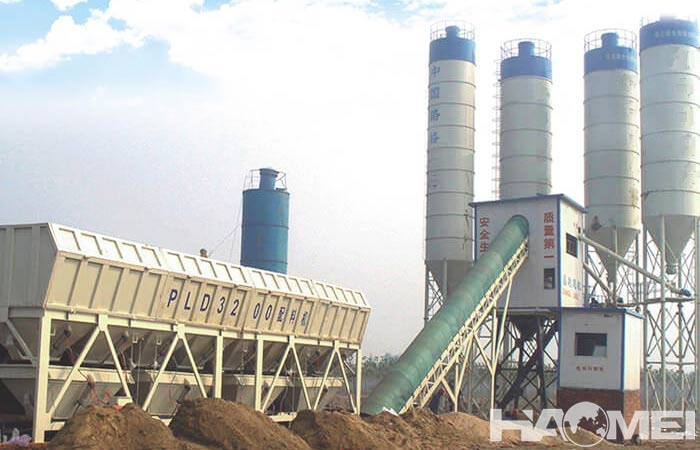
The core definition of concrete batching plant productivity is the volume of qualified concrete produced per unit time. Theoretical and actual production capacities often differ, and inherent design advantages are key to narrowing this gap. Taking our HZS120 concrete batching plant as an example, the industry standard design theoretical productivity is 120 m³/h, but in actual applications, it often drops below 100 m³/h due to issues such as waiting for batching and insufficient mixing. To address this, we optimized the aggregate bin layout, shortening the material conveying distance between the batching machine and the main mixer to 3.5 meters. Simultaneously, we adopted a parallel powder supply design using a twin-screw conveyor, increasing powder conveying efficiency by 40%. This resulted in a stable actual production capacity of 115-120 m³/h. This design has been applied to a large-scale infrastructure project in Southeast Asia, and after six months of continuous operation, the production capacity fluctuation error has been controlled within ±3%.
The performance matching of core components directly determines productivity stability. As the core equipment, the main mixer’s mixing shaft speed, blade layout, and power configuration form a critical closed loop. For equipment exported to high-temperature regions in Africa, we selected an IP55 protection-rated variable frequency motor, paired with a hardened gear reducer, to precisely control the mixing shaft speed at 28-32 r/min, addressing the impact of the local high-temperature environment on motor performance. The blades are made of wear-resistant alloy material and optimized with a spiral staggered layout, reducing the mixing time for each batch of concrete from the conventional 60 seconds to 45 seconds, while ensuring homogeneity fully complies with standards. Data shows that the HZS180 concrete batching plant with this configuration, operating continuously for 12 hours a day, can achieve a monthly production capacity of 42,000 m³, a 15% increase compared to conventionally configured equipment of the same type.
Adaptive design to different operating conditions is a crucial guarantee for achieving productivity. The characteristics of raw materials and climatic conditions in different regions significantly impact production capacity. For example, to address the issue of high aggregate moisture content in some European regions, we added a real-time moisture content detection module to the concrete batching plant. Through sensor data, we adjust the water supply and aggregate ratio in conjunction with the aggregate to prevent conveying blockages caused by damp raw materials, ensuring stable production capacity. Furthermore, to address the low-pressure environment of the South American highlands, we optimized the air circuit system, increasing the cylinder response speed by 25% and resolving production capacity losses caused by delayed unloading gate opening and closing in high-altitude environments.
The productivity of a concrete batching plant is not a reflection of a single parameter, but rather a comprehensive result of design optimization, component matching, and adaptation to operating conditions. As a concrete batching plant manufacturer, we firmly believe that professional production capacity solutions should be customized based on the actual needs of customers. We recommend that global customers, when selecting equipment, not only focus on the theoretical capacity indicated on the model number, but also examine the manufacturer’s technical design capabilities and industry application experience. We will continue to share capacity optimization case studies for different regions and operating conditions, and we welcome customers to discuss their specific project needs with us in depth.
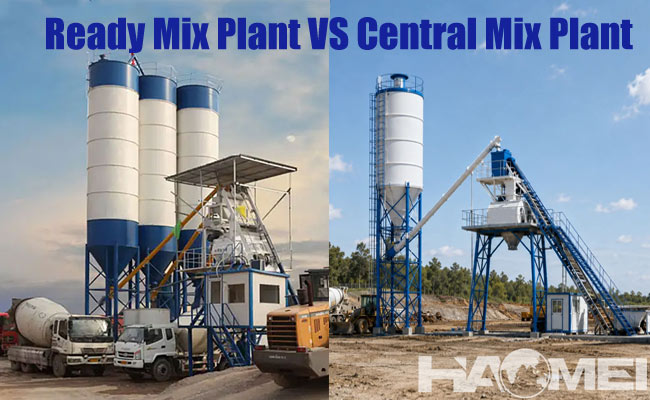 Ready Mix Plant VS Central Mix Plant
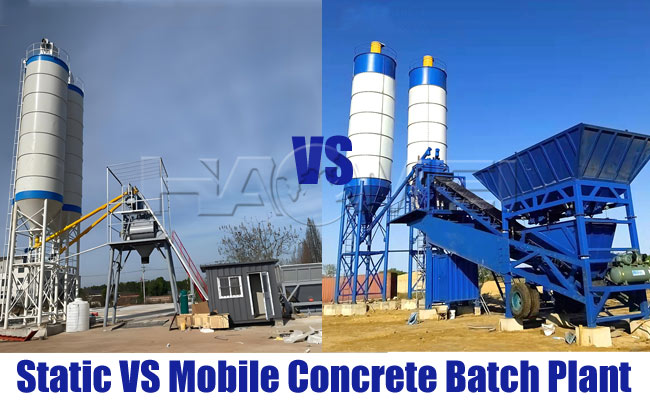 Static VS Mobile Concrete Batch Plant
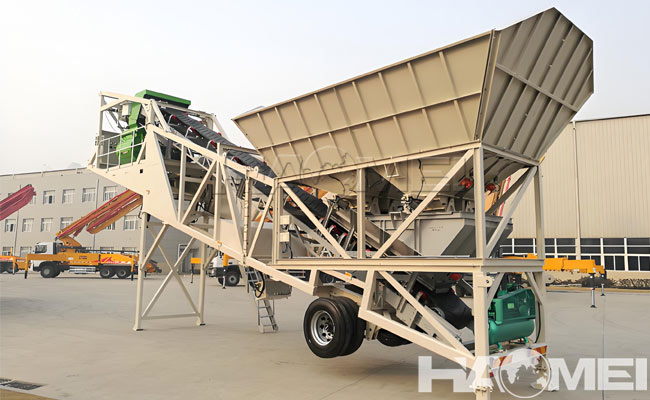 China Mobile Concrete Mixing Plant Manufacturer
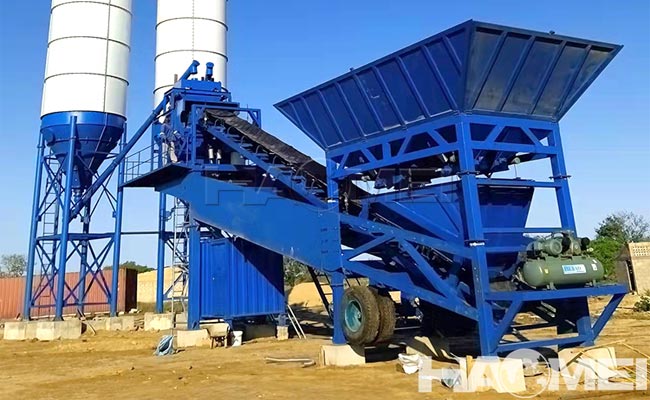 Mobile Wet-Mix Concrete Batching Plant
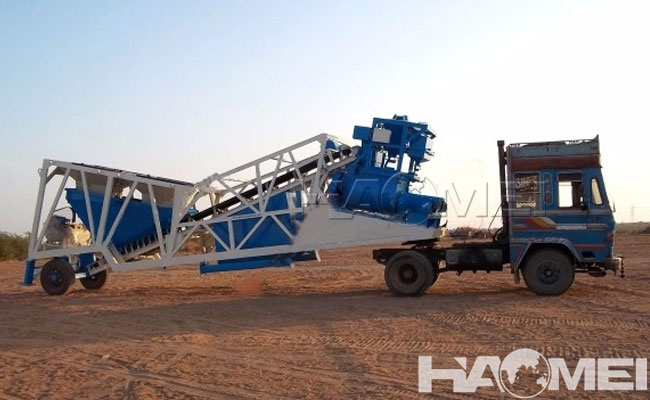 Easy Installation Mobile Concrete Batching Plant