

Categories
- Case & News (50)
- Blog (619)
Most people outside the industry are only familiar with the finished product discharge stage of a concrete batching plant and do not understand the production of qualified ready mix concrete, which relies on a standardized, high-precision, automated closed-loop production line system. A concrete batching plant is a modular, complete set of production equipment. From raw material storage and batching to finished product unloading and equipment maintenance, each process adheres to strict measurement standards and time sequence specifications. The overall concrete batching plant procedure can be divided into five core processes: raw material storage, automatic batching, precise mixing, finished product discharge, and equipment cleaning and maintenance. The production process is mainly automated, with manual labor only responsible for on-duty monitoring and auxiliary operations.
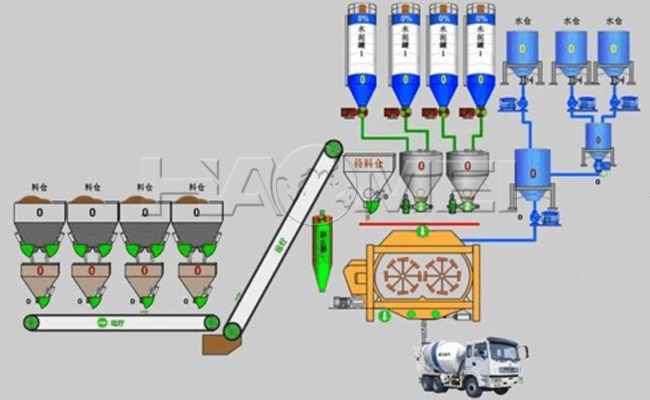
The first process is raw material storage and pre-production preparation, which is the foundation for ensuring stable concrete performance and continuous production. The conventional raw materials for ready mix concrete production include coarse and fine aggregates, silicate cement, fly ash, mixing water, and functional admixtures. The coarse and fine aggregates required for production are stored in zoned, closed-loop warehouses to effectively prevent mixing, moisture absorption, and dust pollution. Powdered cementitious materials such as cement and fly ash are conveyed in a closed system to vertical powder silos via pneumatic conveying equipment, minimizing material loss. Before production, operators input the target concrete strength grade (C20, C30, C35, etc.) into the central control system. The system automatically retrieves the corresponding standard mix proportion parameters, eliminating the need for manual calculation and preventing mix proportion deviations from the outset, ensuring the accuracy of basic materials.
The second process is automated, precise batching, a core step determining the mechanical properties and finished product quality of concrete. The concrete batching plant is equipped with an independent intelligent electronic weighing and metering system, fully compliant with industry metrological standards. Standard metering errors are strictly controlled: coarse and fine aggregate metering error ≤ ±2%, and metering error for fine materials such as cement, mixing water, and admixtures ≤ ±1%. Based on preset system parameters, the equipment completes the quantitative dispensing and precise weighing of various materials in stages, with different types of materials being batched independently and discharged in an orderly manner. The batching process is consistently completed within 30 to 45 seconds, operating in a fully automated closed-loop system. This completely eliminates the precision defects of traditional manual batching, ensuring uniform and compliant material proportions for each batch.
After batching, the materials are conveyed via a sealed belt conveyor to a twin-shaft forced concrete mixer, entering the core mixing process. According to concrete industry production standards, the pure mixing time for ordinary strength grade concrete must not be less than 30 seconds. For high-strength, impermeable, and corrosion-resistant special concretes, the mixing time must be strictly controlled between 45 and 60 seconds to ensure thorough homogenization and mixing of the materials. The concrete mixer utilizes a bidirectional spiral forced mixing action to fully integrate aggregates, cementitious materials, water, and admixtures, ensuring uniform color, no segregation, and no lumps in the finished concrete. The entire mixing process operates in a fully enclosed mode, equipped with professional dust removal equipment, effectively suppressing dust diffusion and meeting environmental production control standards.
After the materials have met the mixing standards, they proceed to the finished product unloading and transportation handover process. The system automatically detects key indicators such as concrete slump and workability. After verification, the unloading gate is opened, and the finished concrete is unloaded into a dedicated mixing and transport truck. The unloading capacity of conventional equipment is 2 to 3 cubic meters per batch. The theoretical hourly output of the HZS180 concrete batching plant can reach 180 cubic meters, with an actual stable and effective capacity of approximately 160 to 180 cubic meters per hour. During the unloading process, the central control system automatically retains traceable data such as production mix proportions, operation time, and material usage, forming a complete production ledger to meet engineering quality acceptance standards. Simultaneously, strict adherence to the initial setting time requirements for concrete is necessary; on-site pouring must be completed within 2 to 4 hours under normal temperature conditions to ensure the performance of the finished concrete.
In the final stage of production, equipment cleaning and routine maintenance must be completed to ensure long-term stable and high-precision operation. After each shift, the equipment automatically performs high-pressure cleaning of the mixing host, unloading chute, and conveyor belts to thoroughly remove residual solidified materials, preventing hardening and caking that could affect the equipment’s metering accuracy and mixing performance. Simultaneously, operators complete routine maintenance tasks such as silo sealing checks, metering instrument calibration, and dust removal equipment condition verification, promptly identifying potential equipment hazards to ensure accurate production parameters and stable equipment operation.
In summary, concrete batching plant procedure is not simply material mixing, but a high-precision, standardized, and traceable industrial production system. From precise metering and batching, homogeneous forced mixing, to standardized unloading and delivery, and standardized equipment maintenance, parameter control and process implementation at each stage are the core keys to ensuring concrete strength, stability, and project quality.
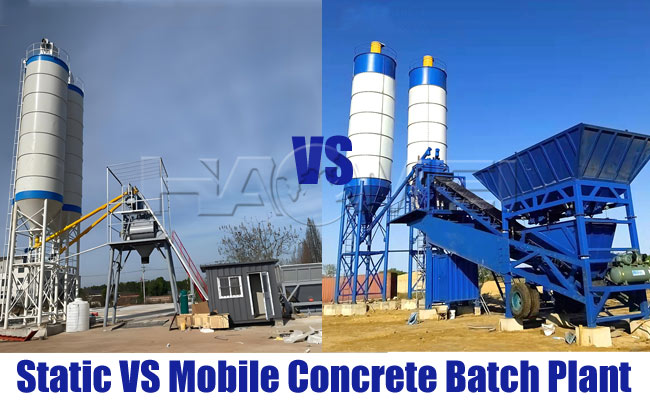 Static VS Mobile Concrete Batch Plant
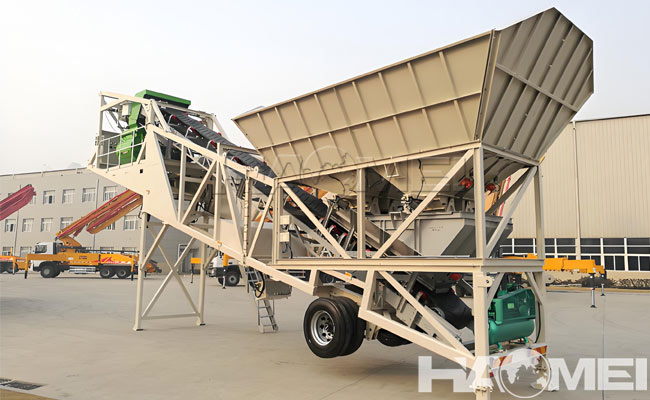 China Mobile Concrete Mixing Plant Manufacturer
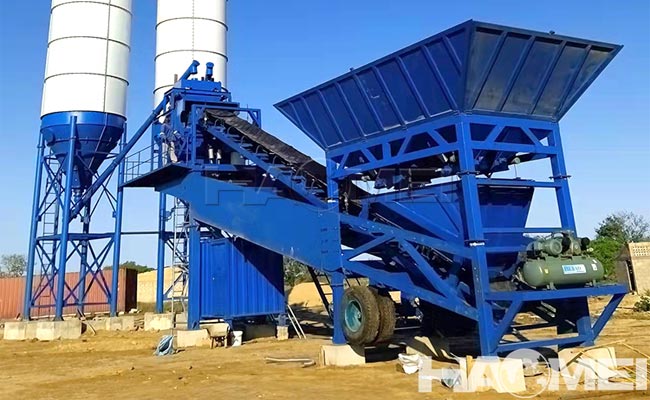 Mobile Wet-Mix Concrete Batching Plant
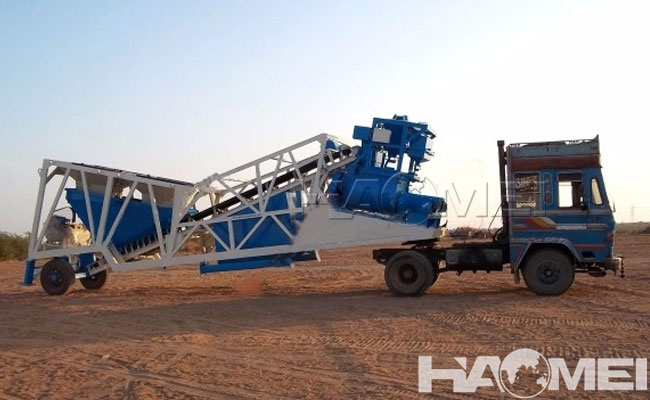 Easy Installation Mobile Concrete Batching Plant
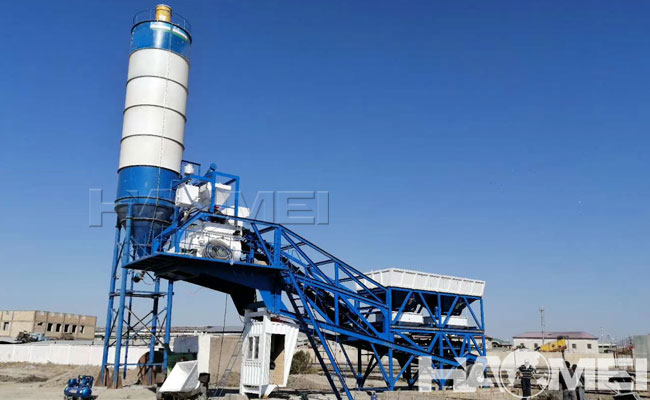 Fast Setup Mini Mobile Concrete Batching Plants