

Categories
- Case & News (50)
- Blog (605)
As technicians at Haomei Machinery, with years of experience in the production and export of construction machinery, we understand that concrete batch mix plants, as core equipment in concrete production, operate with a logic that encompasses standardized process design and intelligent technical adjustments to adapt to different working conditions. Their core principle is the precise proportioning and efficient mixing of sand, cement, water, and admixtures through the coordinated operation of various systems, ultimately producing finished concrete products that meet engineering standards and are widely applicable to diverse scenarios such as housing construction, infrastructure construction, and overseas aid projects.
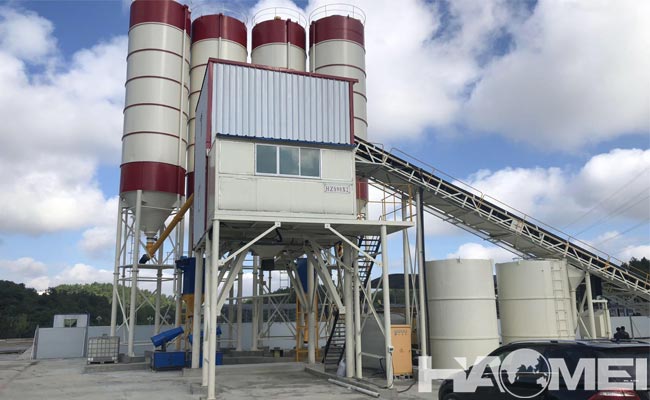
Core System Composition: The Foundation of Coordinated Operation
The stable operation of a concrete batch mix plant relies on the coordinated operation of five core systems. Each component is complementary and has a low tolerance for error, which is a key area we focus on optimizing when producing export equipment.
The material storage system is responsible for the classified storage of raw materials such as sand, gravel, cement, and fly ash. The sand and gravel silos are equipped with frequency converters, while the cement silos require anti-bridging devices and level gauges to prevent raw material clumping or uneven supply from affecting the accuracy of the proportioning.
The metering system is the core guarantee of accuracy, employing electronic weighing and closed-loop control technology. It dynamically calibrates for fluctuations in sand and gravel moisture content and differences in admixture viscosity. Export models are also adapted to different regional voltage standards and environmental protection levels.
The conveying system is divided into horizontal and vertical conveying methods. Screw conveyors are used for powder materials such as cement and admixtures, while belt conveyors are suitable for large-particle sand and gravel. Key control points must be placed on sealing and wear resistance to cope with extreme working conditions such as high temperatures and high dust levels overseas.
The mixing system is crucial for material mixing. The twin-shaft concrete mixer uses counter-rotating blades to create a forced mixing flow, ensuring uniform mixing of materials within 30-90 seconds. The blades are made of high-strength, wear-resistant alloy to extend the concrete batching plant equipment’s service life.
The control system uses PLC intelligent control, integrating formula storage, fault warning, and data traceability functions. It supports manual and automatic mode switching to meet the usage habits of different operators.
Standardized Operation Process: From Raw Materials to Finished Products
The concrete batch mix plant’s workflow follows a closed-loop logic of “raw material conveying – precise metering – forced mixing – finished product discharge,” requiring strict control of timing and accuracy at each step.
After starting the equipment, the control system first calls the preset formula. The storage system then activates the feeding device according to the instructions. Sand and gravel are conveyed to the aggregate metering hopper via belt conveyor, while cement and fly ash are fed into the powder metering hopper via screw conveyor. Admixtures and water enter their respective metering units.
After metering, the materials are added to the mixing host in a preset sequence. First, sand, gravel, and cement are added for dry mixing for 30 seconds, followed by water and admixtures for wet mixing. The twin-shaft impellers use shearing and tumbling actions to fully integrate the materials. During the process, the control system monitors parameters such as mixing current and material temperature in real time. If any abnormality occurs, an alarm is triggered immediately and adjustments are made.
After mixing is complete, the main unit’s discharge gate opens, and the finished concrete is sent to the mixer truck via the discharge hopper. Simultaneously, the concrete batch mix plant equipment automatically cleans the metering hopper and the inner wall of the main unit, preparing for the next batch of production. The entire process is highly automated, and a single station can produce 25-180 cubic meters of concrete per hour.
Key Technical Points and Industry Considerations: Balancing Precision and Adaptability
Based on practical experience in production and export, the core technical challenges of concrete batch mix plants lie in precision control and adaptability to operating conditions. Fluctuations in raw material moisture content are a major factor affecting mix proportion accuracy. We incorporate online moisture content analyzers into our equipment to adjust sand and gravel dosages in real time, preventing insufficient strength in the finished product. For overseas markets, we need to optimize the equipment’s corrosion resistance, dustproofing, and low-temperature resistance design. For example, we upgrade the cooling system in Southeast Asian models and enhance noise control in European and American models to meet local environmental standards.
Meanwhile, energy conservation and intelligent upgrades for concrete batch mix plants are industry trends. We reduce equipment energy consumption by more than 15% by optimizing the mixer host structure and adopting variable frequency motors. The intelligent control system adds remote monitoring functionality, allowing overseas customers to view production data in real time and troubleshoot remotely, reducing after-sales costs. Furthermore, the universality of vulnerable parts is also a key consideration. Export models use standardized vulnerable part specifications to facilitate quick replacement and maintenance by customers, improving equipment uptime.
The working principle of a concrete batch mix plant involves not only standardized system linkage but also technical adjustments tailored to actual operating conditions. As manufacturers and exporters, we must adhere to the core principles of precision and stability while continuously optimizing the adaptability and intelligence of our equipment. This will allow our concrete batch mix plants to maximize their value in different engineering scenarios and provide reliable equipment support for global infrastructure projects.
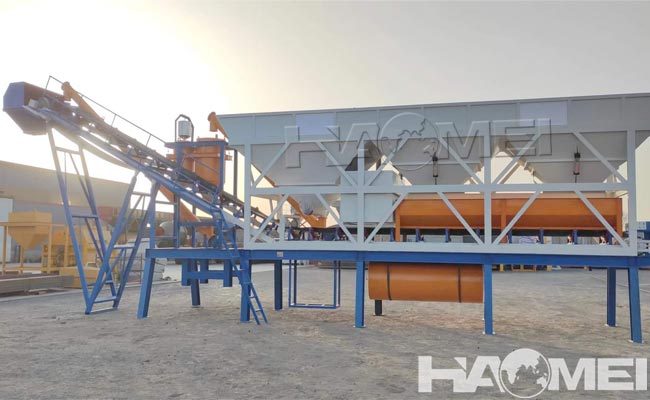 China Dry Mix Concrete Batching Plants
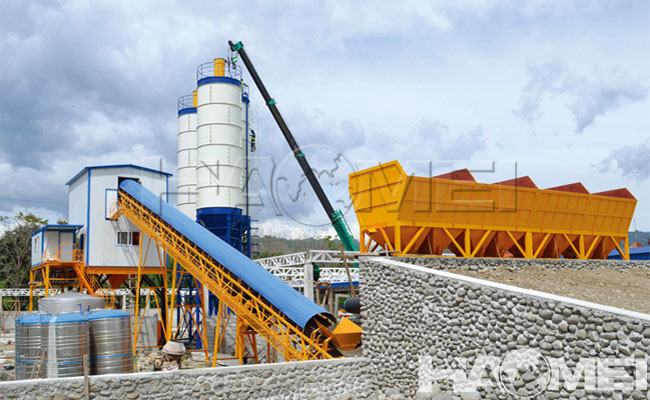 90m3/h Belt Conveyor Concrete Batching Plant
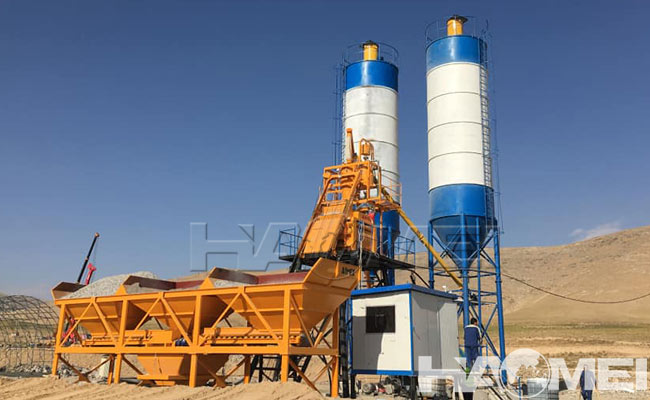 How Much Does Mini Concrete Batching Plant Cost?
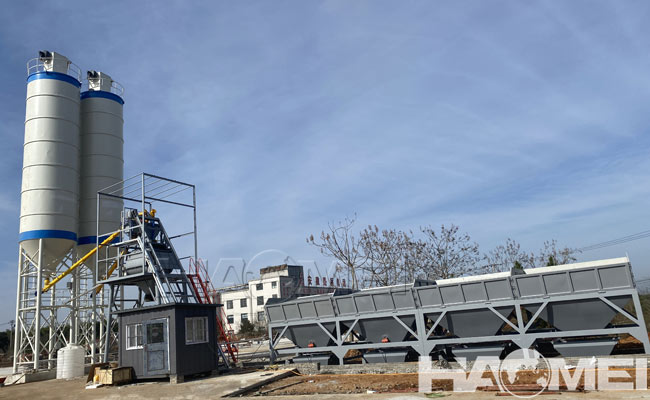 50m3/h Precast Concrete Batching Plant
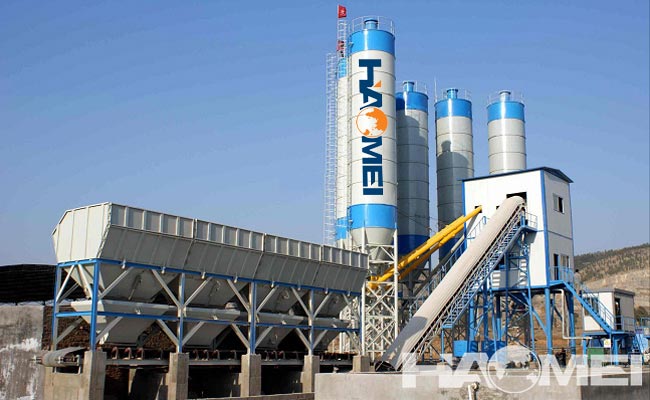 Dust Collector Options For Concrete Mixer Plants