

Categories
- Case & News (50)
- Blog (603)
In small and medium-sized infrastructure projects and precast component factories, mini concrete batching plants (25-50 m³/h) are the preferred choice due to their low investment threshold and flexible deployment. However, many customers only focus on the total price when inquiring about prices, ignoring the differences in hardware composition and configuration levels behind the cost. Ultimately, this leads to either frequent malfunctions due to reduced features at lower prices, or paying extra costs for redundant functions. As a manufacturer that has been exporting mini batching plants for many years, we break down the cost structure, dissecting the price proportion of each system and the selection logic to help customers make cost decisions that match their specific needs.
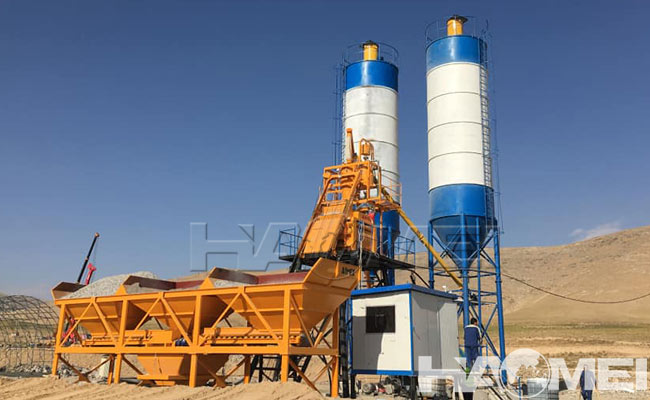
From a hardware cost structure perspective, the cost of a mini batching plant can be broken down into five core systems, each with a relatively fixed proportion.
The mixing main unit system accounts for 40%-45% of the total cost and is the core investment of the equipment. It includes a twin-shaft forced mixer, geared motor, wear-resistant liners, and mixing arms, directly determining the production capacity and service life.
The batching and metering system accounts for 20%-25%, consisting of batching bins, belt scales, screw conveyors, and weighing sensors, determining the accuracy of concrete proportioning.
The material conveying and storage system accounts for 15%-20%, encompassing aggregate belt conveyors, cement silos, and dust removal devices.
The electrical control system accounts for 8%-12%, including PLC control cabinets, touch screens, and operating software.
The remaining 5%-10% covers the frame structure, pneumatic components, and consumable parts.
Taking the HZS35 concrete batching plant at $26,500 as an example, the main unit system accounts for approximately $11,400, and the metering system approximately $6,300, totaling nearly 70%, making them a key focus when comparing prices.
The mini concrete batching plant cost ranges for different configuration levels differ significantly, essentially reflecting a tiered differentiation in the brand and performance of core components. The entry-level mini batching plant is priced between $18,000 and $28,000 USD, using domestically produced mainframes and sensors, and a semi-automatic control system. It meets basic production needs and is suitable for short-term, low-intensity temporary projects. The standard configuration mini concrete batching plant is priced between $28,000 and $40,000 USD, with upgraded high-chromium alloy wear-resistant parts, improved metering accuracy to ±1%, and fully automatic PLC control; this is the mainstream choice for most overseas projects. The high-end mini batching plant is priced between $40,000 and $48,000 USD, equipped with imported reducers and sensors, and features remote monitoring and an automatic lubrication system, suitable for commercial mixing plants and long-term prefabrication plants with high stability requirements. Mobile mini batching plant models, due to the addition of a trailer chassis and hydraulic outriggers, are $3,000-$5,000 USD more expensive for the same configuration.
Besides the equipment cost itself, customers also need to consider three easily overlooked additional costs.
First, there is the cost of adapting to different operating conditions. In high-temperature and dusty areas, dustproof seals and high-temperature resistant motors are required, increasing costs by 5%-8%; in high-humidity coastal areas, anti-corrosion treatment is required, increasing costs by 3%-5%.
Secondly, there are shipping and customs clearance costs. Shipping from Chinese ports to East Africa and Southeast Asia, including insurance, costs approximately $3,000-$6,000 USD, depending on the destination port.
Thirdly, there are installation and commissioning costs. Smaller plants typically require one engineer to be dispatched on-site, costing approximately $1,500-$3,000 USD including travel expenses. Calibration and training are required before formal production can commence.
Based on export delivery experience, cost optimization for mini concrete batching plants is not simply about lowering prices, but rather about configuring according to needs. 80% of small and medium-sized projects can meet their needs with standard configurations, without needing to pay a premium for imported brands. However, metering sensors and wear-resistant main unit components cannot be reduced; cutting corners on these two parts will directly double later maintenance costs. It is recommended that customers allocate 85% of their budget to the core system and 15% to reserve for consumable parts and installation services, balancing production stability and long-term operation and maintenance costs.
Overall, the cost of mini concrete batching plants follows the principle of “pricing core components and selecting configurations in tiers,” with the mainstream investment range concentrated between $18,000 and $48,000 USD. Understanding the cost breakdown and functional value of each system, and selecting the right system based on the project schedule and local conditions, is crucial to maximizing the return on investment.
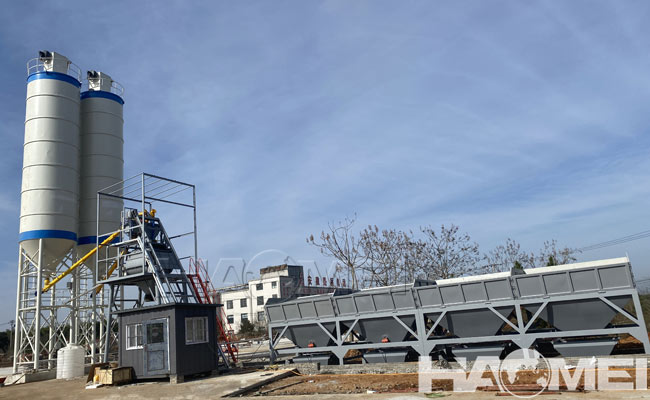 50m3/h Precast Concrete Batching Plant
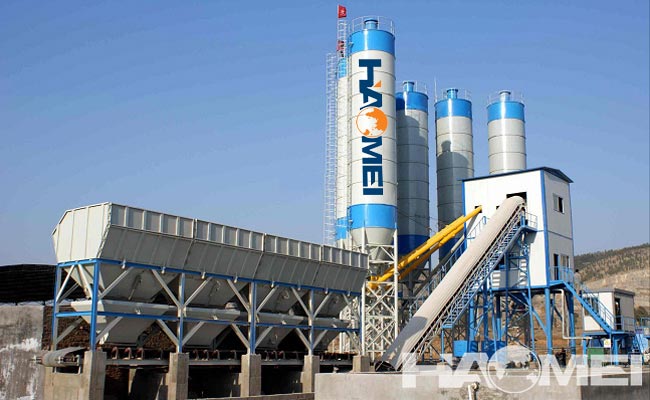 Dust Collector Options For Concrete Mixer Plants
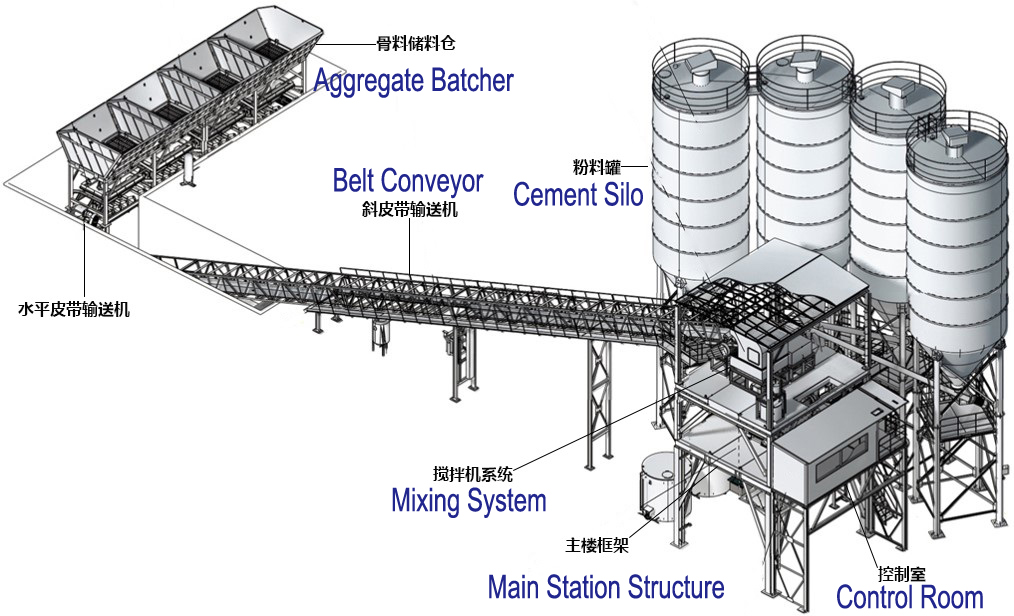 Standardized Concrete Batching Plant Process Flow
 Easy Install Concrete Batching Plant