

Categories
- Case & News (50)
- Blog (611)
Batching plant aggregate bins are containers used in concrete mixing plants to store aggregates such as sand and stone. They are typically divided into sections based on different particle sizes or types. An aggregate bin, equipped with weighing hoppers, conveyor belts, sensors, and other precision components, forms a batching machine. Aggregate bins ensure a continuous supply of aggregates, preventing production disruptions due to raw material shortages. They balance the demands of aggregate conveying and mixing, reducing production interruptions caused by fluctuations in conveying. Some aggregate bins may be equipped with simple metering devices, but their accuracy is usually low; generally, weighing is primarily achieved through the batching machine.
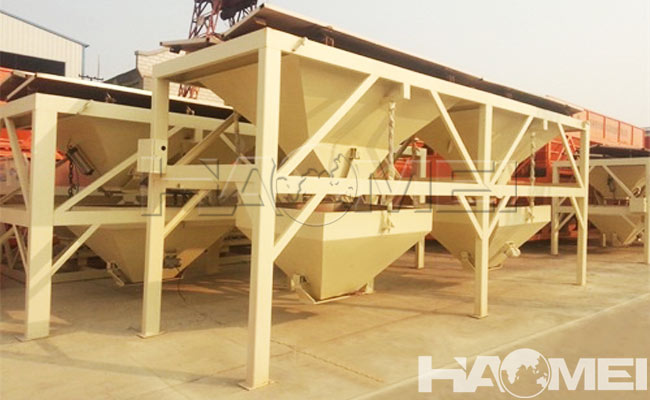
Aggregate bins in batching plant are generally constructed of steel. To ensure the uniformity and flowability of the aggregates, the bottom of the silo is usually sloped, and vibrators are installed on the silo walls. When aggregate blockage occurs, the vibrators can be activated to allow the aggregates to fall smoothly.
Classification:
Based on different storage methods and forms, batching plant aggregate bins can be classified into vertical aggregate bins and beam-type aggregate bins, etc.
Vertical aggregate bins are suitable for small concrete mixing plants, occupying a small area, with a simple structure, and are easy to install and maintain.
Beam-type aggregate bins are suitable for large-scale concrete mixing plants, offering large storage capacity and are frequently used in large-scale engineering projects.
Silo Setup:
Aggregate bins are typically divided into multiple compartments to store different specifications of aggregates, such as coarse sand, fine sand, and gravel. The number of silos in a batching plant depends on the types of aggregates required for concrete preparation. Common configurations include 3, 4, and 5 compartments, with 4 compartments generally sufficient. Six or more compartments can be added based on specific production needs.
Supporting facilities:
A discharge gate is installed at the bottom of the batching plant aggregate bin, with an electric or pneumatic device controlling the discharge rate to transport the aggregates to the metering hopper for batching. Furthermore, to accurately control the amount of aggregate added, the aggregate silo may be equipped with a metering system.
Functions of aggregate bins:
Storing aggregates:
The primary function of aggregate bins is to store aggregates such as sand and gravel, ensuring the supply of aggregates required for construction.
Ensuring aggregate quality:
Through proper storage and management, aggregate silos can prevent aggregates from becoming damp, contaminated, and segregated, thus ensuring aggregate quality.
Improved production efficiency:
Aggregate bins, working in conjunction with concrete batching machines, enable precise metering and rapid transport of aggregates, thereby increasing concrete production efficiency.
Improved construction environment:
Aggregate bins provide enclosed storage of aggregates, reducing dust pollution and improving the construction environment.
Key design and management considerations for batching plant aggregate bins:
Storage capacity:
The storage capacity of aggregate bins should be rationally designed based on the production capacity of the mixing plant and the rate of aggregate consumption to avoid aggregate shortages or stockpiling.
Structural strength:
The structure of the aggregate bin should be able to withstand the total weight of the aggregates and the impact of machinery such as loaders, ensuring safety and reliability.
Smooth discharge:
The discharge port of the aggregate bin should be rationally designed to ensure smooth discharge, preventing jamming or leakage during opening and closing.
Prevention of segregation:
For graded mixtures, the inlet and outlet of the aggregate silo should prevent aggregate segregation, ensuring uniform aggregate gradation.
Environmental protection measures:
Aggregate bins should be fully enclosed with appropriate dust suppression measures to meet the requirements of green production.
Regular inspection and maintenance:
The safety, reliability and cleanliness of aggregate bins should be inspected regularly to ensure the safety of the bins and avoid accidents and pollution.
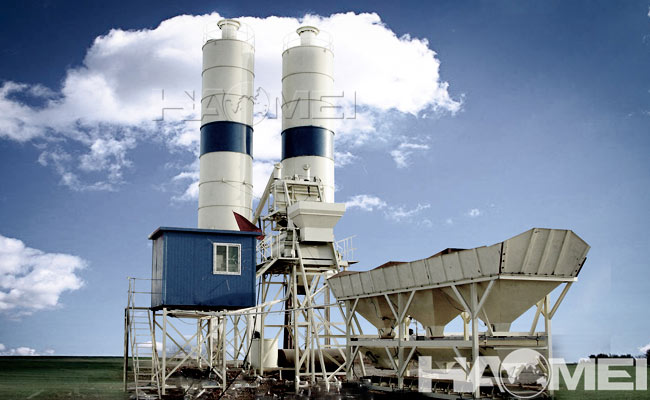 Concrete Batching Plant With Compact Structure
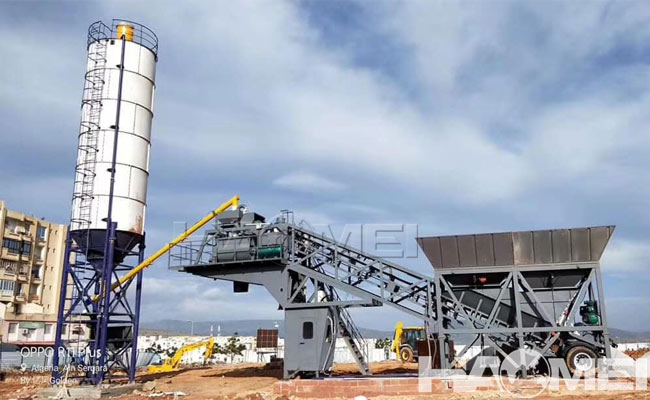 Small Mobile Batching Plant Price in 2026
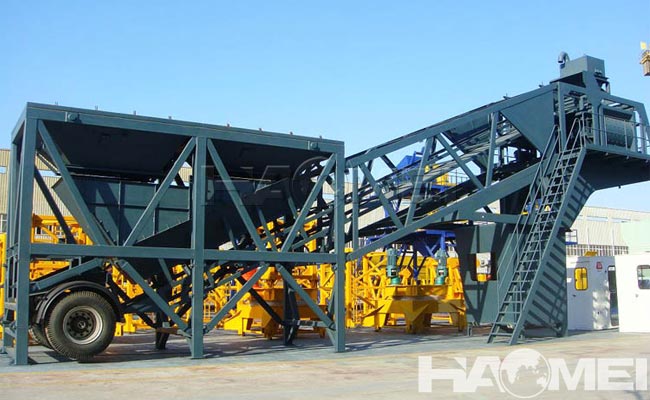 Portable Concrete Plant Price
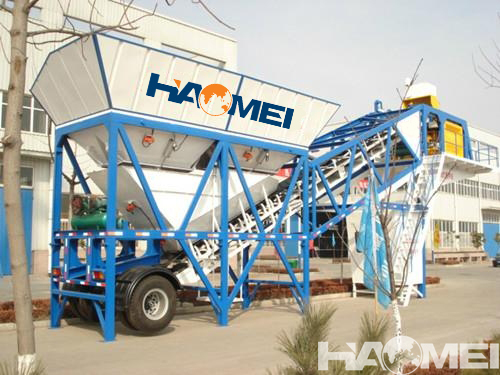 Mobile Compact Concrete Batching Plants
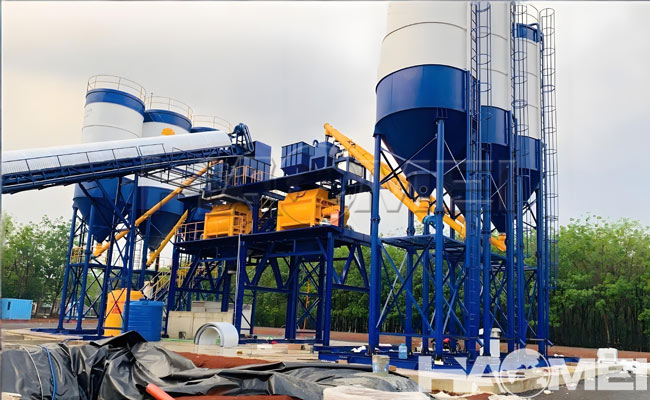 Wet Type Concrete Batching Plant