

Categories
- Case & News (50)
- Blog (619)
Dust control in concrete batching plants cannot be solved by a single piece of equipment. Dust is generated at multiple points, including powder conveying, aggregate feeding, main mixing, and material transfer. The dust concentration, particle size, and air pressure characteristics vary greatly at different points. Blindly selecting a uniform system often leads to insufficient dust collection at key points and wasted airflow at secondary points. Based on Haomei Machinery’s years of experience in designing and implementing environmentally friendly concrete batching plants, a truly efficient dust collection solution should follow the principles of “targeted approaches, systemic coordination, and source control,” matching specific dust collection technologies to different dust scenarios, rather than simply piling up equipment.
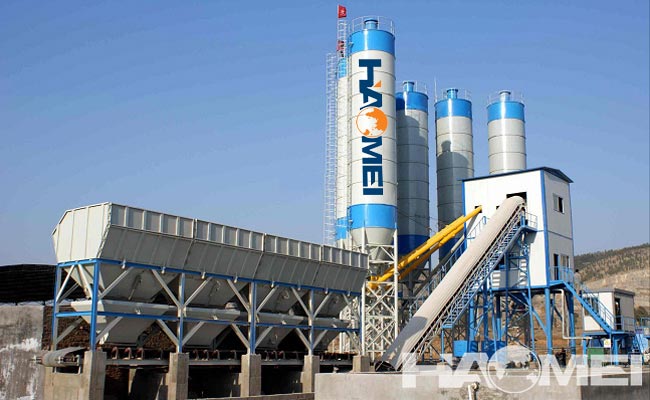
The top of the powder silo is the highest concentration of dust in a concrete batching plant and a core control point for the dust collection solution. When powder enters the silo via pneumatic conveying, the pressure inside the silo increases instantly, causing a large amount of fine cement and fly ash particles to overflow. Conventional ordinary bag filters are prone to clogging and dust leakage problems. For this operating condition, the industry mainstream adopts a pulse-jet silo top dust collector solution, the core of which lies in the selection of filter media and the matching of the cleaning system. Haomei’s standard silo top dust collector uses membrane-coated polyester filter cartridges with dense micropores on the surface, capable of intercepting fine dust larger than 0.3μm, achieving a filtration efficiency of over 99.5%. It is equipped with a high-pressure pulse-jet cleaning system, which periodically and sequentially blows clean the dust accumulated on the surface of the filter cartridges, eliminating the need for frequent manual disassembly and maintenance. Simultaneously, a silo top pressure relief safety valve is included to prevent excessive pressure inside the silo from damaging the filter media during conveying, structurally adapting to the characteristics of high-pressure powder conveying.
The mixing host and the batching and feeding area are the second largest dust generation points, characterized by intermittent dust generation accompanied by material drop impact. Many sites only install simple dust collectors on the top of the main unit, neglecting the dust generation from the aggregate feeding port, resulting in unorganized dust dispersion throughout the production site. For this area, the optimal solution is an integrated design of “closed-loop air collection + negative pressure dust removal”: a sealed material guide cover is installed at the batching machine’s feeding port, and the mixing host adopts a fully enclosed cavity. Dust is collected uniformly into the integrated dust collection unit through a dedicated air duct. Unlike external dust collection equipment added later, the Haomei mixing plant integrates the dust collection duct with the equipment structure during the design phase, resulting in stronger sealing and more uniform negative pressure. This not only prevents dust leakage due to positive pressure overflow from the main unit but also simultaneously collects dust generated during aggregate feeding, requiring no additional site modifications from the customer.
Unorganized dust from aggregate stockpiles and conveyor corridors is the most easily overlooked aspect in solutions. This type of dust consists of coarse particles and occurs over a wide area; relying solely on filtration is extremely inefficient. A combined “dust suppression + dust removal” solution is more suitable: the aggregate stockpile uses enclosed fencing and an intelligent spray system to settle large dust particles through water mist; the belt conveyor corridor is fully enclosed, with a small dust collection device at the end to treat floating dust within the corridor. Haomei optimizes conveyor paths and enclosed structures in its overall site planning, reducing transfer drops and exposed areas, thus lowering the difficulty of controlling fugitive dust from a layout perspective.
Two common pitfalls in dust removal solution selection are: first, blindly pursuing large air volumes, leading to energy waste and rapid filter media wear; second, using universal filter media, which is unsuitable for humid or high-concentration dust conditions. A scientific solution should be precisely matched to the air volume, dust characteristics, and operation and maintenance conditions at each location, balancing treatment effectiveness with long-term operating costs.
Ultimately, the core of dust control in concrete mixer plants is not simply “adding equipment,” but rather a comprehensive environmental planning process from equipment design to site layout. Haomei’s environmentally friendly concrete mixing plants include a dust removal system as a standard module, adapting to the dust characteristics at each location from the source, achieving compliant dust emissions throughout the production process, and facilitating the compliant implementation of various construction projects.
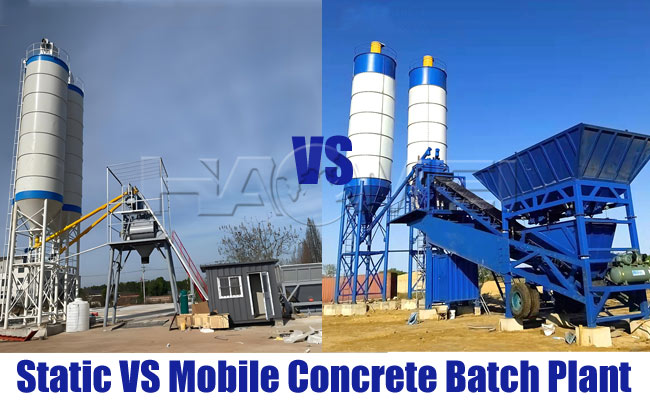 Static VS Mobile Concrete Batch Plant
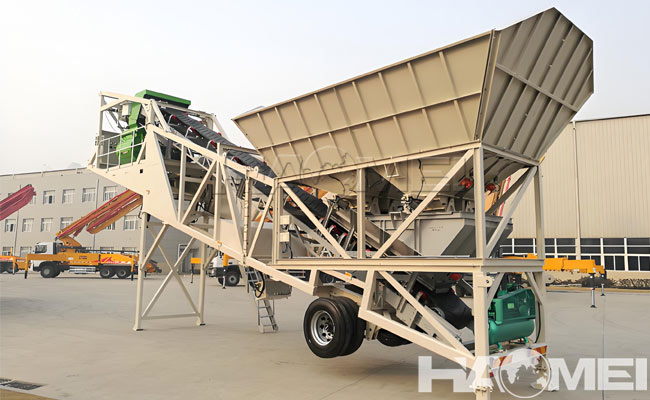 China Mobile Concrete Mixing Plant Manufacturer
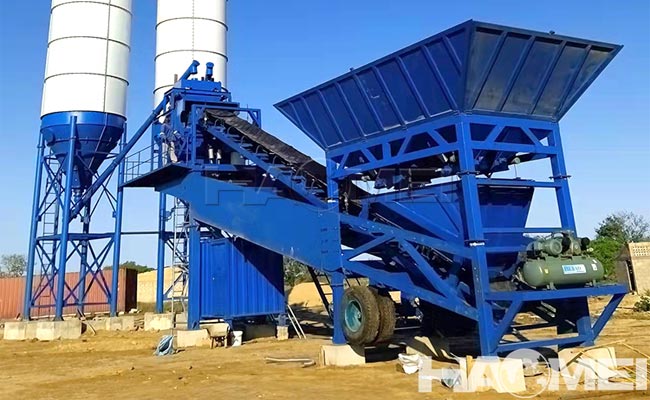 Mobile Wet-Mix Concrete Batching Plant
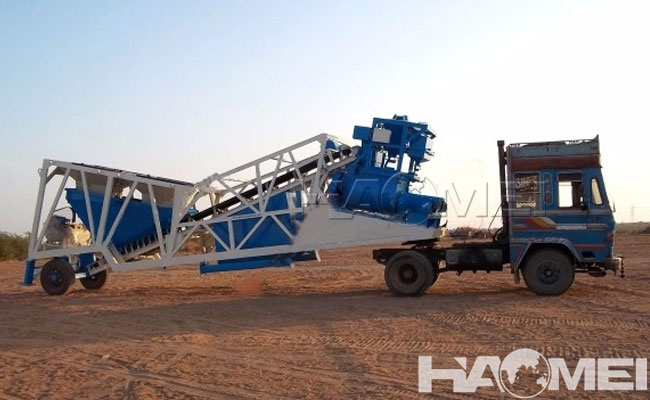 Easy Installation Mobile Concrete Batching Plant
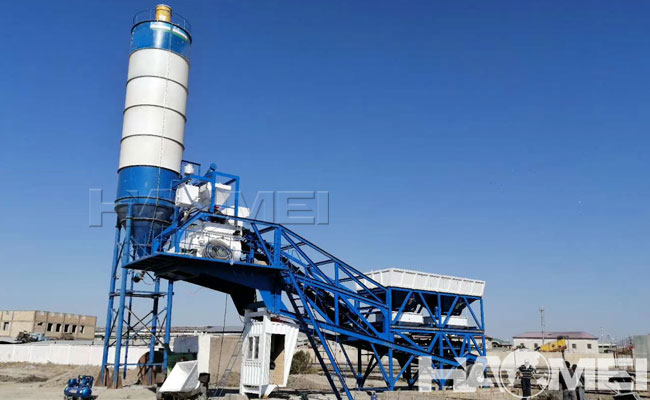 Fast Setup Mini Mobile Concrete Batching Plants