

Categories
- Case & News (50)
- Blog (616)
As a sales manager at Haomei Machinery with 10 years of experience in the export market, I have handled export orders for over 30 dry-mix concrete batching plants. These projects range from large-scale infrastructure projects in North America to rural road construction in Romania, from small commercial concrete plants in Southeast Asia to large-scale real estate developments in the Middle East. I deeply understand that price is not just a series of numbers, but a comprehensive reflection of equipment value, operating costs, and return on investment.
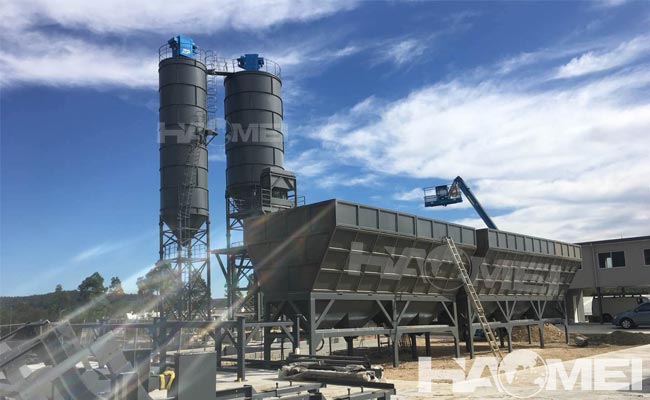
Currently, Haomei’s dry-mix concrete batching plants cover core models from small to large, suitable for projects of different scales. The price range for each model is clearly defined, and there is reasonable fluctuation due to factors such as configuration and customization requirements.
Among them, the small-scale dry mix concrete plant, with the HZS25 model as its core, has a theoretical production capacity of 25 m³/h. Standard configuration includes a PLD800 batching machine, a 50-ton cement silo, a basic automatic metering system, and simple PLC control. It is suitable for small-scale rural construction, municipal maintenance, and small-scale precast component processing. The standard configuration price in Q1 2026 was US$28,500-32,000. Adding a mobile chassis for improved portability would cost an additional US$3,000-5,000. The advantages of this type of equipment are its small footprint, simple operation, and suitability for the core needs of dry-mixing and conveying materials, making it suitable for small projects with limited budgets and short construction periods.
Among medium-sized dry mix concrete plants, the HZS50 and HZS60 are the two models with the largest export volume. The HZS60 is the preferred choice for global customers and also the model with the highest repurchase rate among the orders I have handled, which deserves special mention.
The HZS50 model has a theoretical production capacity of 50 m³/h. Standard configuration includes a PLD1600 batching machine, two 100-ton cement silos, an automatic metering system with an accuracy of ±0.5%, and basic dust collection equipment. It focuses on precise batching, mixing, and conveying of dry-mix materials, suitable for rural roads, small factories, and regional small-scale commercial concrete plants. The standard configuration price is US$45,800~52,300. If customers require environmental upgrades and add a high-efficiency dust collection system (dust emissions ≤20mg/m³), the price will increase by US$3,500~4,800.
The HZS60 model dry mix concrete plant has a theoretical capacity of 60 m³/h. Standard configuration includes a PLD2400 batching machine, three 100-ton cement silos, a fully automatic PLC control system (with a 7-inch touchscreen supporting remote operation), a high-precision metering system (cement and aggregate metering accuracy of ±0.5%), and a high-efficiency pulse dust removal system. It can efficiently complete the batching, mixing, storage, and conveying of dry-mix materials, meeting the needs of medium-to-large-scale projects such as regional commercial concrete plants, medium-sized infrastructure projects, and industrial park construction. The standard configuration price is US$58,600~65,200. Based on my practical case last year, for the export of eight HZS60 sets to Mexico, the customer requested an additional winter insulation system due to the low winter temperatures there, and also wanted the control system changed to a Spanish version. These two customization requests added US$5,000 to the cost, resulting in a final transaction price of US$63,500 per set. Although the price was slightly higher, the equipment’s operating efficiency increased by 15%, and the customer reported that the investment payback period was shortened to 14 months, far below the industry average of 18 months.
Large-scale dry mix concrete plants mainly include two models: HZS90 and HZS120, suitable for large-scale infrastructure projects. The HZS90 model has a theoretical capacity of 90 m³/h and comes standard with four 150-ton cement silos, a fully automatic metering and control system, large-scale dust removal equipment, and a waste recycling system. It can realize large-scale and automated production of dry-mixed materials and is suitable for scenarios such as highways, large-scale building construction, and bridge construction. The standard configuration price is US$89,500~98,700. The HZS120 model has a theoretical capacity of 120 m³/h and comes standard with five 200-ton cement silos, an intelligent control system (supporting data monitoring and fault early warning), and high-efficiency environmental protection equipment. It is suitable for large-scale dry-mixed material production needs and is suitable for high-end scenarios such as urban expressways, airport construction, and large-scale water conservancy projects. The standard configuration price is US$128,000~142,500. Last year, 12 sets of HZS90 equipment were exported to Saudi Arabia. Due to bulk purchase (≥6 sets), the customer enjoyed an 8% bulk discount, resulting in a final transaction price of US$87,200 per set, saving 10.5% compared to purchasing a single set, significantly reducing the customer’s procurement costs.
Based on 12 years of export experience, I have summarized three core factors affecting the dry mix concrete plant price, which are also key points that customers often overlook when selecting equipment.
First, customized configuration. Different scenarios directly affect the price. For example, projects in high-altitude areas require modifications to the equipment for high-altitude adaptation (adjusting engine power and sealing performance), increasing the price by 8%~12%; explosion-proof equipment (suitable for petrochemical, mining, and other scenarios) increases the price by 15%~20%; upgrading automation from semi-automatic to fully automatic increases the price by 12%~18%; upgrading to European emission standards requires the installation of environmental protection equipment that meets EU standards, increasing the price by 5%~8%.
Secondly, there’s the issue of market-specific pricing. Different regions have different certification requirements, leading to price variations. The North American market requires UL certification, resulting in a 10%–15% price increase; the EU market requires CE+EMC certification, resulting in an 8%–12% price increase; Southeast Asia and the Middle East do not require special certifications and maintain the standard price; bulk purchases from countries along the Belt and Road Initiative can enjoy an additional 3%–5% discount.
Thirdly, there’s the economies of scale. 1-2 sets are charged at the standard price, 3-5 sets can enjoy a 4%–6% discount, and ≥6 sets can enjoy a 7%–9% discount. The advantages of bulk purchasing are particularly significant.
Regarding product selection and cost optimization, based on years of practical experience, I offer three suggestions to global clients.
First, adhere to the principle of matching production capacity. The model selection must be based on a coefficient of 1.2 (actual production needs multiplied by actual needs) to avoid waste caused by over-engineering. I once encountered an African customer who blindly pursued high capacity and purchased the HZS120 model, but the actual daily demand was only 60 m³/h, resulting in equipment utilization of less than 50%, a 30% increase in monthly operating costs, and ultimately, idle equipment, causing unnecessary losses.
Second, prioritize cost-effectiveness. The core reason why the HZS60 model has become an export bestseller is its outstanding cost-effectiveness. Its spare parts are highly interchangeable, with 85% of global suppliers providing compatible parts. Maintenance costs are 22% lower than the HZS90, and the return on investment reaches 28%, making it suitable for most medium-sized customers.
Third, focus on total lifecycle costs. The wear-resistant parts (liners, blades) standard in Haomei dry mix concrete plants have a service life of 8,000 hours, 30% higher than the industry average, reducing replacement costs by approximately US$12,000 annually. Over the long term, this can save customers significant maintenance expenses.
As a dry-mix concrete batching plants manufacturer, Haomei Machinery’s price advantage stems from our core competitiveness: a modular production model that reduces manufacturing costs by 15%; centralized procurement of spare parts by the group, reducing spare parts costs by 8%~12%; and a self-operated export model, eliminating middlemen and ensuring our prices are 35%~45% lower than European and American brands. We also offer a 2-year warranty on the entire machine, lifetime technical support, and three after-sales service points overseas, enabling rapid response to customer repair needs and addressing any concerns.
Finally, here’s a practical suggestion for global procurement customers: clearly define your production capacity needs → select a basic model → assess customization requirements → calculate the total lifecycle cost. This will allow you to choose the most suitable equipment, achieving a win-win situation of cost and efficiency. For detailed quotations, technical solutions, or customized configurations tailored to specific project scenarios, please contact the Haomei export team. We will provide the most cost-effective solutions based on your project characteristics to help your project progress efficiently.
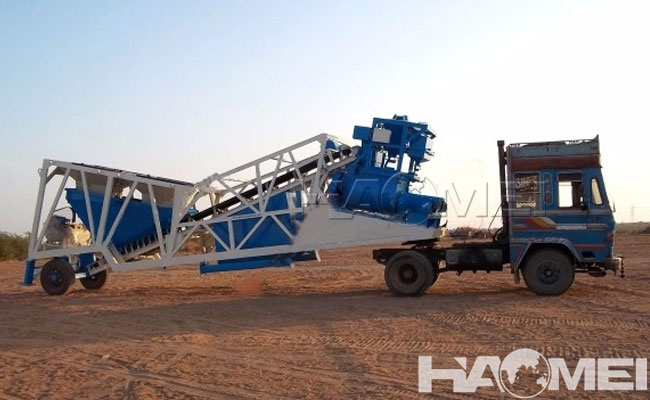 Easy Installation Mobile Concrete Batching Plant
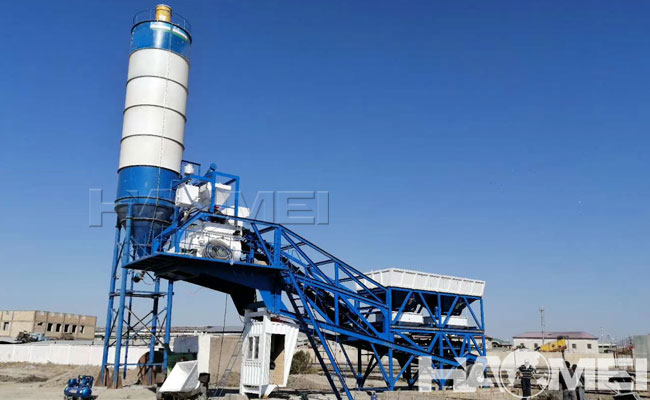 Fast Setup Mini Mobile Concrete Batching Plants
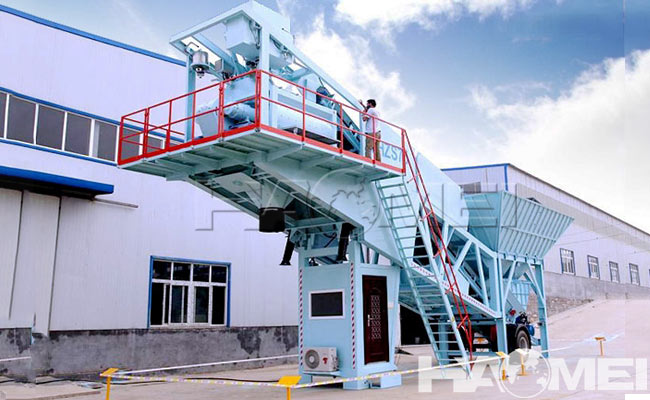 China Mobile Concrete Plant Factory
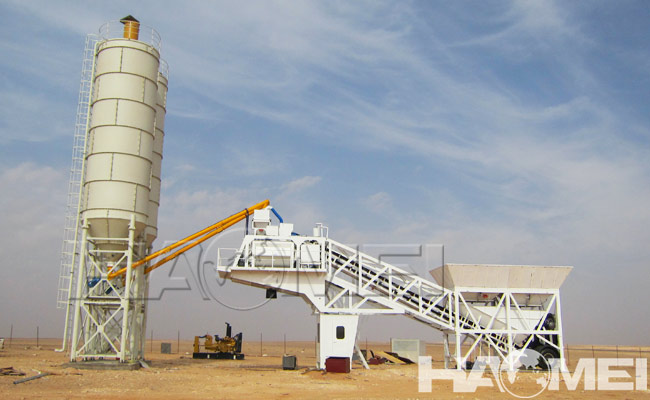 What Are Mobile Concrete Batch Plants?
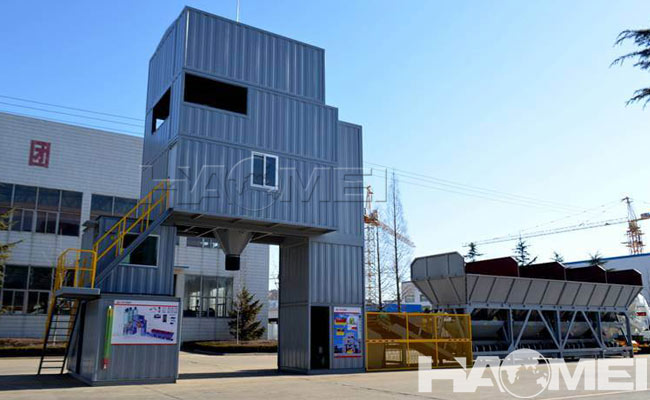 Advantages of Containerized Concrete Batch Plant