

Categories
- Case & News (50)
- Blog (611)
With the global infrastructure industry’s green upgrade, environmental management of concrete batching plants has become a core standard for production and operation. Traditional concrete batching plants easily generate four types of pollution during operation: dust, wastewater, noise, and waste residue. This not only damages the construction environment but also makes it difficult to comply with environmental access regulations in various countries. As a professional concrete batching plant manufacturer, Haomei Machinery, combining years of industry experience, has summarized standardized pollution control solutions. Leveraging its self-developed equipment advantages, Haomei Machinery addresses environmental problems at the source, helping customers achieve low-carbon and compliant production.
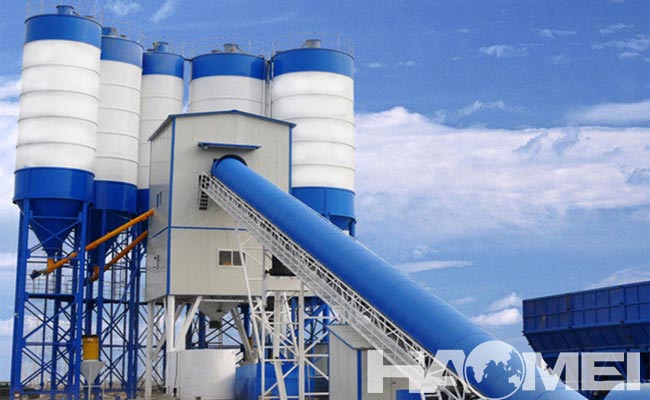
Dust is the most significant source of pollution from batching plants, concentrated in stages such as material storage, aggregate conveying, cement silo feeding, and batching and mixing. Traditional open operations easily cause dust dispersion, polluting the surrounding air. Conventional control methods include basic measures such as material yard enclosure, dust spraying, and silo top dust removal. Haomei’s environmentally friendly concrete batching plants, however, adopt a fully enclosed overall design, preventing dust overflow at the source. The equipment comes standard with a high-efficiency pulse dust removal system, covering the cement silo, fly ash silo, and the sealed silo of the mixing host, capable of adsorbing over 99% of fine dust. The enclosed batching machine and sealed conveyor corridor design completely eliminate dust generation during aggregate transport, fully meeting stringent domestic and international air quality standards.
Wastewater pollution mainly originates from equipment cleaning wastewater and accumulated rainwater. This wastewater contains suspended solids from cement and sand, and direct discharge would cause water and soil pollution. The industry standard treatment is to construct sedimentation tanks to purify the water, while the Haomei concrete batching plant is equipped with an integrated wastewater recycling system, achieving zero wastewater discharge and recycling. Wastewater and slag generated from equipment cleaning can be collected, settled, and filtered. The purified water can be reused for equipment cleaning and aggregate spraying, avoiding sewage discharge problems and significantly saving water resources, aligning with the concept of green production.
Noise and slag pollution are easily overlooked environmental shortcomings. The noise from the concrete batching plant mainly originates from the operation of the main unit, fans, and material impact. Prolonged high-decibel noise can affect the surrounding environment. Our core mixing units (JS series and Sicoma MAO series) have undergone specialized noise reduction optimizations, equipped with vibration-damping bases and sealed, silent enclosures. These optimized mixing structures effectively reduce operating noise, achieving low-noise and stable operation. For residual concrete waste, the equipment features an automatic cleaning and recycling device, allowing for screening and recycling of the waste for reuse, preventing solid waste accumulation and pollution.
In the industry’s trend towards environmental upgrades, end-of-pipe treatment is outdated; source control is the core solution. Most equipment on the market relies on auxiliary accessories for passive pollution control, while Haomei’s environmentally friendly concrete mixing plants undergo comprehensive upgrades in structural design, core configuration, and system integration, integrating dust prevention, noise reduction, water circulation, and waste recycling. This eliminates the need for additional complex equipment, achieving full-dimensional environmental compliance.
With years of experience in the industry, we understand that customers need not only efficient and high-yield mixing equipment but also compliant and worry-free environmentally friendly equipment. Haomei consistently uses global environmental standards as its R&D guide, ensuring that every exported unit balances production efficiency with green attributes, helping infrastructure projects around the world achieve efficient, low-carbon, and compliant operation.
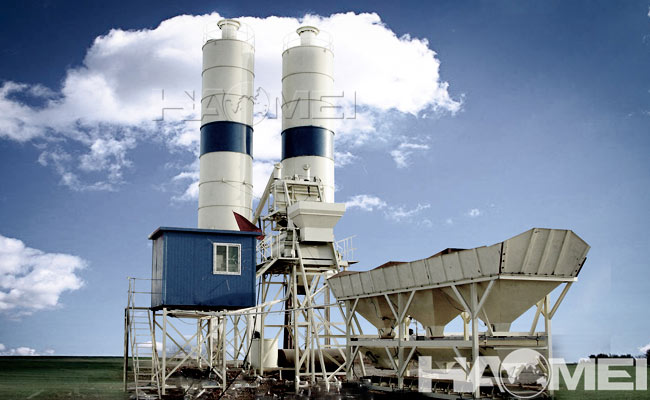 Concrete Batching Plant With Compact Structure
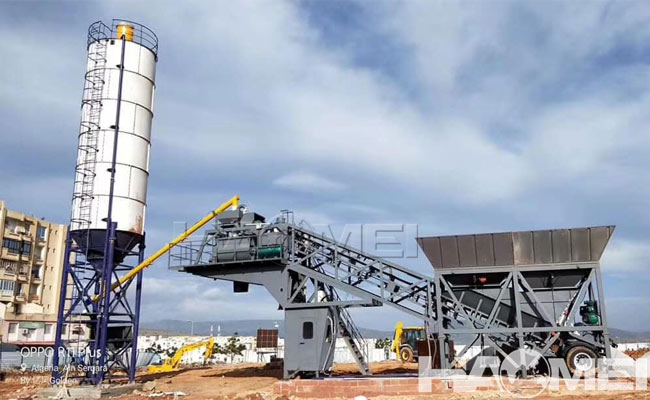 Small Mobile Batching Plant Price in 2026
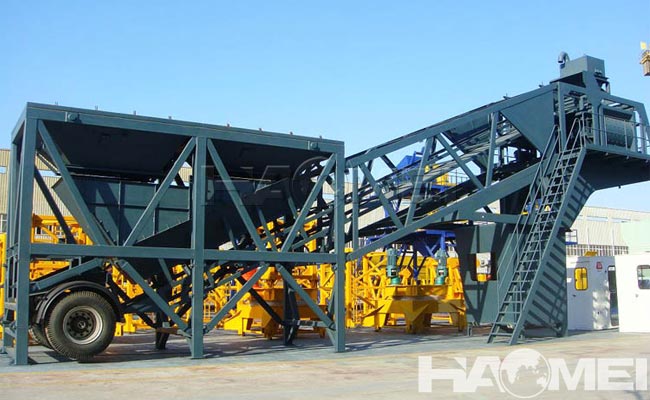 Portable Concrete Plant Price
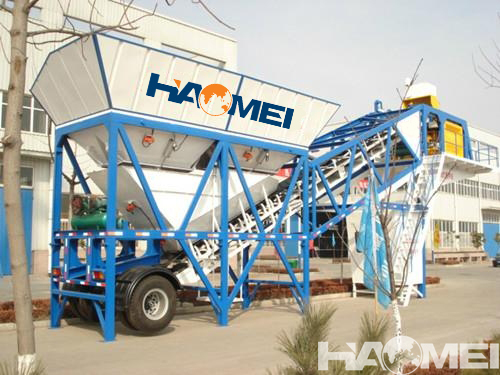 Mobile Compact Concrete Batching Plants
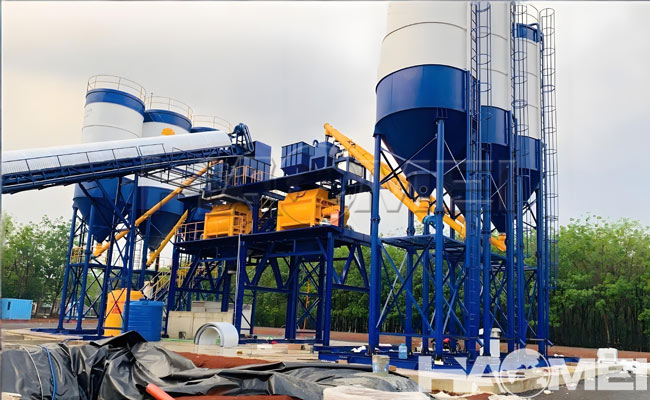 Wet Type Concrete Batching Plant