

Categories
- Case & News (50)
- Blog (619)
Stationary and mobile concrete batch plants represent the two primary configurations in the ready-mix concrete equipment sector, catering to the distinct needs for long-term, stable production versus flexible, mobile deployment. Selecting the appropriate type is critical, as it directly impacts project timelines, capital investment, and operational efficiency. Drawing on Haomei Machinery’s global project delivery experience and technical expertise, this guide provides a comparison across four key dimensions: deployment characteristics, production capacity and performance, cost structure, and suitable application scenarios.
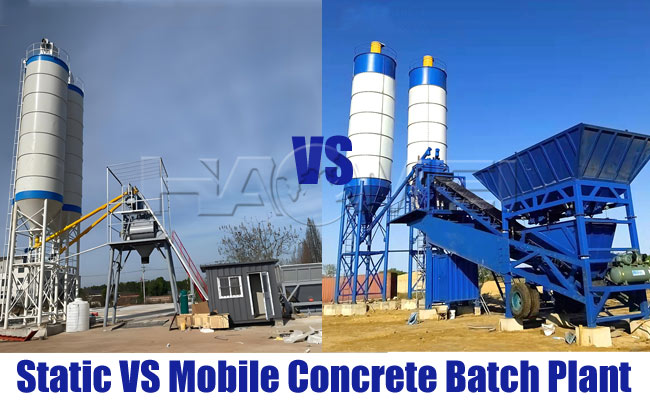
Stationary concrete batching plants—exemplified by the HZS series—utilize permanent reinforced concrete foundations. Their main structure consists of a multi-level steel platform, complemented by independent powder silos, enclosed aggregate storage sheds, and various civil engineering infrastructure. The equipment foundation requires C30-grade concrete, which necessitates a 28-day curing period; the total installation and commissioning time for the entire plant ranges from 20 to 30 days. These concrete batch plants require a ground bearing capacity of 180–250 kPa and serve as fixed production hubs that cannot be relocated.
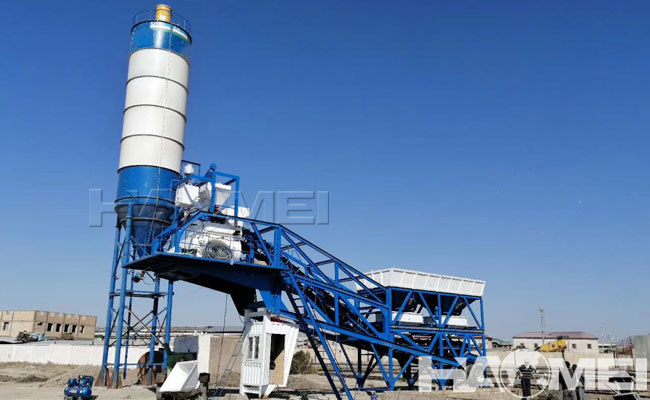
Mobile concrete batching plants—primarily the YHZS series—feature a trailer-mounted or modular integrated design, with all production units housed on a mobile chassis. They do not require reinforced concrete foundations; the site simply needs to be leveled and compacted. With a required ground bearing capacity of 120–150 kPa, standard models can be assembled and commissioned on-site in 1–3 days, while dismantling and relocation can be completed within 2–4 days, allowing for flexible movement in line with project progress.
Stationary concrete batching plants offer a broad range—from the HZS25 to the HZS240—with theoretical hourly capacities spanning 25 to 240 cubic meters. Equipped with twin-shaft compulsory mixers and independently calibrated weighing systems, these plants achieve an accuracy of ≤±2% for aggregates and ≤±1% for powders, water, and admixtures. Designed for 24-hour continuous operation with an effective annual runtime of 270–300 days, they offer high long-term operational stability and uniform component wear, resulting in a service life of 10–15 years.
Due to constraints imposed by chassis dimensions and load-bearing capacity, mobile concrete batching plants typically offer production capacities ranging from 25 to 90 cubic meters per hour, with some larger models reaching up to 120 cubic meters per hour. Their core components are identical to those used in stationary concrete plants, ensuring that measurement accuracy meets the same engineering standards. These units are generally designed for single-shift operations of 8–12 hours per day, with an effective annual operating period of 200–250 days and a total service life of approximately 6–8 years.
While the initial procurement cost for a mobile concrete batching plant is 15%–25% higher than that of a stationary concrete plant with equivalent capacity, the mobile option eliminates the need for permanent civil engineering foundations and auxiliary structures—expenses that typically account for 25%–35% of the total investment for a stationary facility. For projects with a duration of one year or less, the initial total investment for a mobile batch plant is 20%–30% lower than that of a stationary one. Over the long term, however, the operation and maintenance (O&M) cost per unit of capacity for a stationary batch plant is only 70%–80% that of a mobile batch plant, as wear parts are less expensive and have longer replacement cycles. Based on a five-year operational lifecycle, the production cost per unit of concrete for a stationary concrete plant is 18%–25% lower than that of a mobile concrete plant; this cost advantage becomes even more pronounced as the production scale increases.
Stationary concrete batching plants are best suited for projects with an operational lifespan exceeding three years, such as commercial concrete supply, urban infrastructure development, or large-scale building construction. For instance, a commercial concrete project in West Africa—supplied by Haomei Machinery—utilized an HZS120 stationary concrete plant. Over six years of operation, it produced a cumulative total of over 1.2 million cubic meters of concrete, with a lifecycle cost per unit of capacity 32% lower than that of a mobile plant of similar scale. Conversely, mobile batching plants are ideal for linear infrastructure projects—such as highways or water conservancy works—with durations of two years or less, as well as for emergency repairs or construction in remote, mountainous regions. In a highway project in Southeast Asia, three YHZS50 mobile concrete plants were deployed; they were relocated on average every 10 days, with each move taking only two days—a setup that reduced temporary infrastructure investment by 60% compared to a stationary alternative.
The key to selecting the right equipment lies in aligning it with the project duration and the required supply radius: stationary concrete batch plants are the preferred choice for long-term, stable demand, while mobile concrete batch plants are better suited for short-term, flexible requirements.
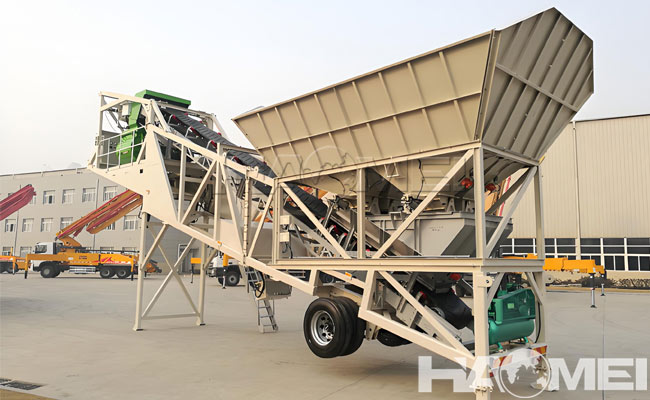 China Mobile Concrete Mixing Plant Manufacturer
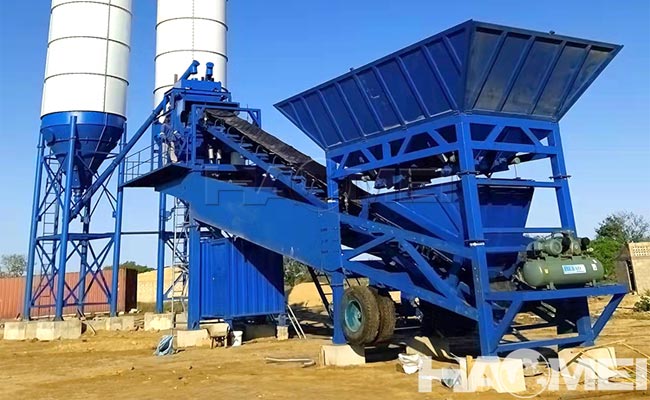 Mobile Wet-Mix Concrete Batching Plant
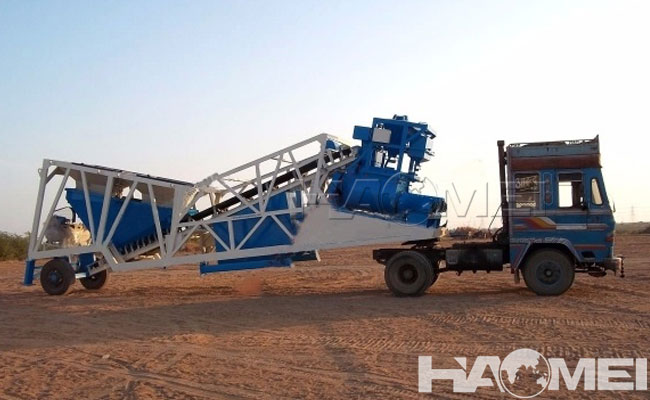 Easy Installation Mobile Concrete Batching Plant
 Fast Setup Mini Mobile Concrete Batching Plants