

Categories
- Case & News (50)
- Blog (620)
Both ready-mix concrete plants and central mix concrete plants are industrial-scale concrete production facilities. They utilize centralized batching and forced-mixing processes, which effectively enhance the consistency of concrete quality and reduce pollution at construction sites. The core differences between this two kinds of concrete mixing plant lie in their operational positioning, service scope, and configuration standards; selecting the wrong type can directly impact project investment costs and regulatory compliance. Drawing on Haomei Machinery’s global project delivery experience, we provide a multi-dimensional, quantitative comparison below.
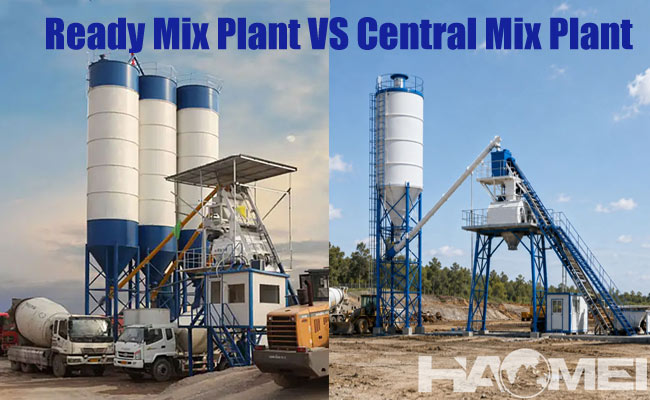
In terms of operational positioning and service scope, the two types of concrete mixing plants serve distinct purposes.
A ready mix concrete plant operates as an independent commercial entity, with the sale of finished concrete as its primary business. It typically serves a 15–30 km radius, supplying concrete for various construction sectors—including residential, municipal, and infrastructure projects—and requires a comprehensive infrastructure for production, quality control, delivery, and sales. By industry definition, “ready-mix concrete” refers to concrete that is batched and mixed at a concrete plant and then transported to the construction site in its mixed state via concrete mixer trucks; the entire production process adheres to standardized quality requirements for commercial concrete.
In contrast, a central mix concrete plant is a facility built specifically to support a particular construction project or a cluster of projects within a single industrial park. Its entire output is consumed internally and does not enter the commercial market. Such plants are usually established at the start of a project and dismantled or relocated upon its completion, meaning their operational lifespan is strictly tied to the project’s duration.
Regarding capacity configuration and technical standards, the two types of concrete lants follow distinct tiers based on their specific operational roles.
For ready-mix concrete plants designed for stable, long-term operation, the standard configuration typically ranges from the HZS90 to HZS180 models. These concrete mixing plants come equipped with twin-shaft forced mixers, fully automated batching control systems, comprehensive pulse-jet dust collection and wastewater recycling facilities, and an independent, standardized laboratory. They achieve batching accuracy of ≤±2% for aggregates and ≤±1% for powders and water, capable of producing concrete grades from C15 to C60, as well as specialized concrete mixes. A single ready mix concrete plant generally has an annual capacity of at least 100,000 cubic meters, with facilities operated by leading commercial concrete enterprises reaching capacities of 300,000 cubic meters or more.
In contrast, the configuration of central mix (project-specific) concretge plants is flexibly adjusted based on project scale: smaller projects often utilize HZS25 to HZS60 models, while large-scale linear infrastructure projects may employ HZS90 to HZS120 models. While the core mixing and batching performance remains consistent with commercial ready-mix plants, auxiliary systems—such as environmental protection equipment and laboratory facilities—can be simplified according to project requirements. For some remote projects, mobile central mix concrete plants can be installed in as little as seven days.
There are systematic differences regarding regulatory compliance and cost-benefit models.
From a compliance perspective, commercial ready-mix concrete plants must obtain a professional contracting qualification for ready-mix concrete, which entails specific requirements for net assets, technical personnel, and testing equipment, alongside approvals from various authorities, including environmental and urban planning departments. Central mix concrete plants, however, are managed as temporary construction facilities and fall under the scope of the overall project construction permit; they do not require a separate commercial production license, resulting in a more streamlined approval process.
In terms of costs, the initial investment for a central mix concrete plant is 30%–40% lower than that of a commercial ready-mix plant of equivalent capacity, primarily due to differences in auxiliary facilities, licensing costs, and the need for a dedicated transport fleet.
Regarding revenue models, commercial ready-mix plants generate profit through market-based sales, with a typical static payback period of 2–3 years. Central mix concrete plants are not intended for external profit generation; their core value lies in ensuring project timelines and reducing concrete procurement costs—ultimately lowering total costs by 10%–15% compared to purchasing commercial ready-mix concrete from third-party suppliers.
Based on practical experience, projects focused on the commercial supply of concrete in urban or county-level areas are best served by ready-mix concrete plant solutions. Conversely, large-scale infrastructure, water conservancy, or mining projects with a duration exceeding one year are better suited for on-site central mix concrete plants. For a highway project in Southeast Asia, Haomei Machinery supplied three HZS90 concrete batching plants, which reduced overall costs by 12% compared to sourcing ready-mix concrete from local suppliers, while also ensuring the construction schedule remained on track. In another instance, a county-level commercial concrete project in West Africa utilized an HZS120 ready-mix concrete plant, allowing the investor to fully recoup their capital within 2.5 years of operation. Haomei Machinery’s comprehensive range of HZS concrete batching plants is designed to meet the requirements of both types of scenarios, with customized configurations and on-site implementation guidance available based on the specific nature of each project.
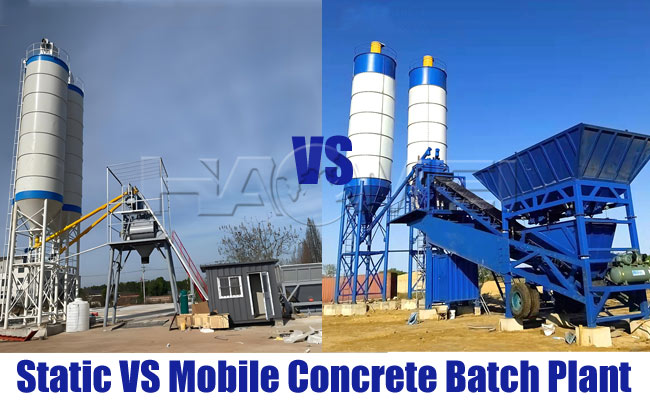 Static VS Mobile Concrete Batch Plant
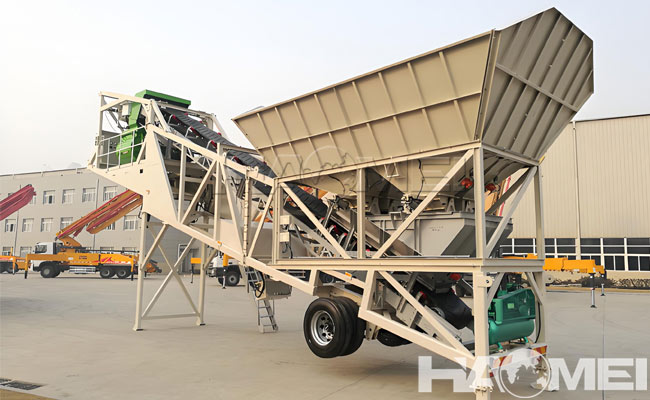 China Mobile Concrete Mixing Plant Manufacturer
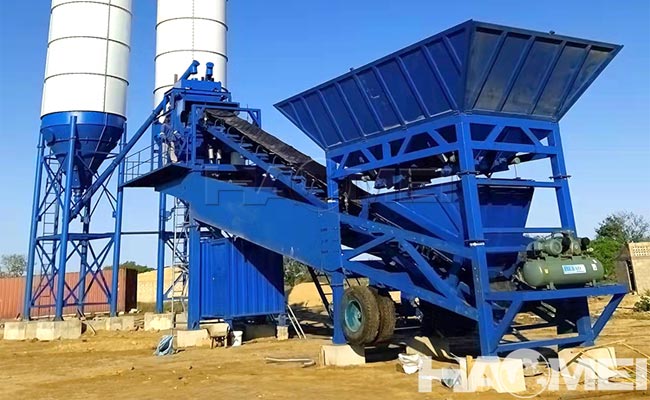 Mobile Wet-Mix Concrete Batching Plant
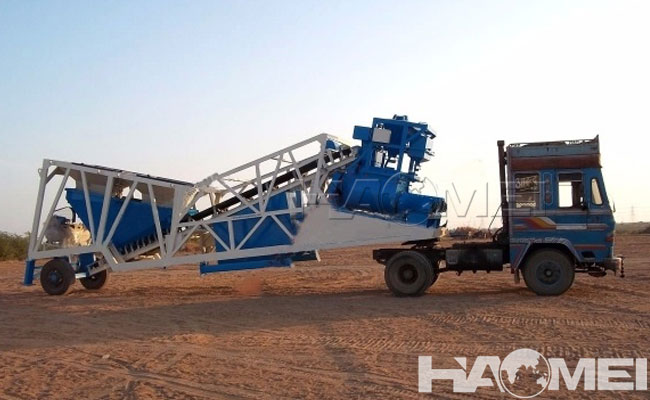 Easy Installation Mobile Concrete Batching Plant