

Categories
- Case & News (50)
- Blog (617)
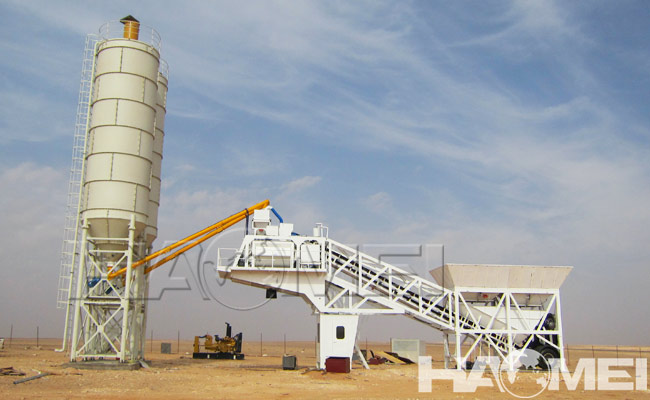
A mobile wet-mix concrete plant is a trailer-mounted production unit that integrates aggregate storage, precise proportioning, forced wet-mixing, and discharge. It enables the on-site production of plastic concrete that meets specific mix design and slump requirements. The YHZS series of mobile wet-mix plants from Haomei Machinery offers capacities ranging from 25 to 90 m³/h. Featuring an integrated, all-in-one design, these plants can be commissioned rapidly without the need for permanent concrete foundations—making them ideal for on-site concrete supply for dispersed, remote, or short-term infrastructure projects.
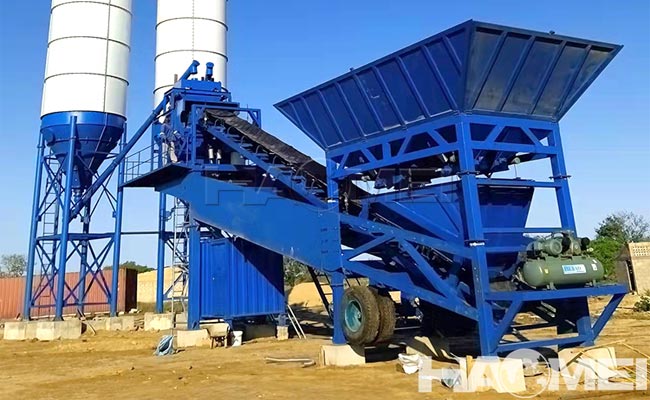
The YHZS series wet-mix concrete plants utilize a twin-shaft compulsory mixer as their core component. Two counter-rotating shafts drive high-manganese steel blades, subjecting materials to a triple-action mixing process—shearing, convection, and compression—to ensure the thorough blending of aggregates, cement, water, and admixtures. The YHZS25 model is equipped with a JS500 mixer (500L nominal discharge capacity, 60-second standard cycle, 25 m³/h theoretical capacity); the YHZS35 features a JS750 mixer (750L nominal discharge capacity, 30–32 m³/h stable continuous output); the YHZS50 and YHZS60 models utilize the JS1000 series (50–60 m³/h capacity); and the YHZS90 is powered by a heavy-duty JS1500 mixer (up to 90 m³/h theoretical capacity), suitable for medium-scale construction projects. The equipment accommodates crushed stone aggregates (up to 60 mm) and gravel/pebble aggregates (up to 80 mm), covering the vast majority of aggregate specifications used in engineering.
The weighing system employs an independent, multi-stage architecture. Aggregate weighing accuracy is maintained within ±2% (cumulative), while cement, water, and admixtures are measured via dedicated, separate weighing units. This ensures a weighing precision of ±1% for both powders and liquids, allowing for precise control over the water-cement ratio. The concrete produced maintains a slump within the 50–220 mm range, with a variation of ≤10 mm within a single batch. The system can produce various types of concrete—including standard plastic, pumpable, and dry-stiff (low-slump) mixes—to meet the requirements of diverse construction techniques.
The core value of a mobile concrete plant lies in its on-site production capabilities and flexible deployment. Designed with a trailer-mounted chassis, the unit can be towed on public roads at speeds of 40–50 km/h. Its core components do not require disassembly for relocation, allowing for seamless transfer to the next project site upon completion of the current one. On-site, the concrete plant only requires a leveled, hardened surface; four hydraulic outriggers are used for precise leveling. The entire process—from arrival on-site to the commencement of production—can be completed in as little as 12 hours, eliminating the civil engineering costs and the 7–10 day setup period typically associated with stationary wet mix concrete plants.
For projects in remote areas or those spanning long distances, on-site wet-mix production effectively addresses the challenges of transporting ready-mix concrete—namely, significant slump loss and the risk of premature setting. Based on our experience with rural road projects in East Africa, a YHZS35 wet-mix plant can be moved along the construction route (typically relocating every 20 km) and resume production on the very same day. Compared to sourcing ready-mix concrete locally, this approach reduces total material and transportation costs by 32%, while also preventing quality fluctuations caused by long-distance hauling. The equipment comes standard with fully enclosed material handling channels and a pulse-jet dust collection system, keeping dust emissions below 10 mg/m³—a standard that meets environmental requirements for urban construction.
Model selection of mobile wet mix plant is based on daily concrete demand: the YHZS25 is suitable for small-scale repair projects with a daily requirement of up to 100 m³; the YHZS35 is ideal for rural infrastructure and municipal projects requiring around 200 m³ per day; the YHZS50–YHZS60 models are designed for medium-sized projects with a daily demand exceeding 300 m³; and the YHZS90 is intended for large-scale, continuous construction operations.
Haomei Machinery offers customized modifications tailored to specific regional operating conditions—such as preheating and thermal insulation for frigid climates, dust protection and enhanced cooling for high-temperature or sandy environments, and anti-corrosion treatments for coastal regions. Our equipment comes standard with a multi-language operating interface, with CE certification options available. We export to over 60 countries and regions worldwide, supported by a global spare parts warehousing network and 24/7 remote technical assistance.
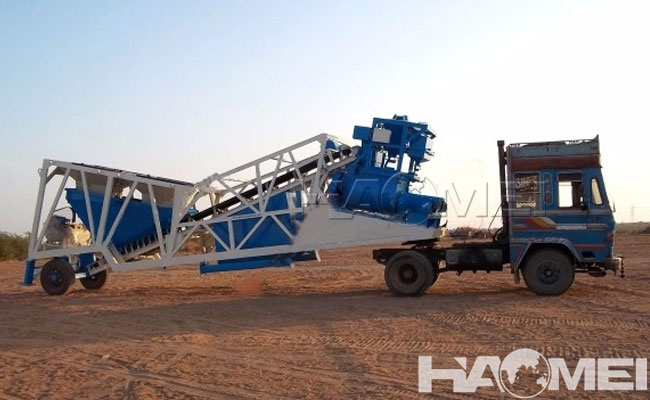 Easy Installation Mobile Concrete Batching Plant
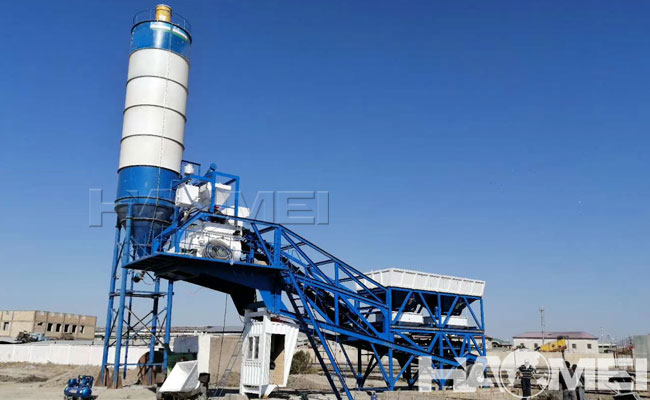 Fast Setup Mini Mobile Concrete Batching Plants
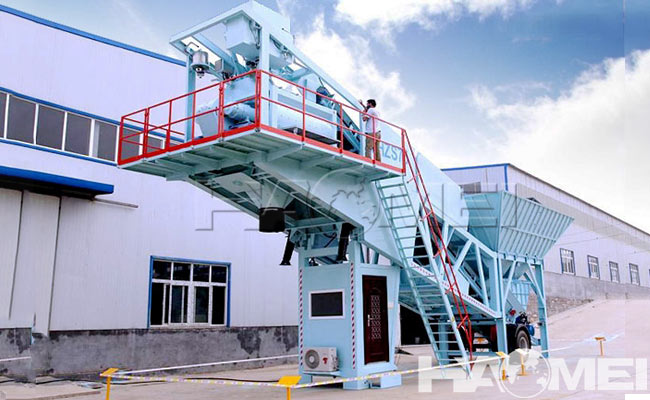 China Mobile Concrete Plant Factory
 What Are Mobile Concrete Batch Plants?