

Categories
- Case & News (50)
- Blog (613)
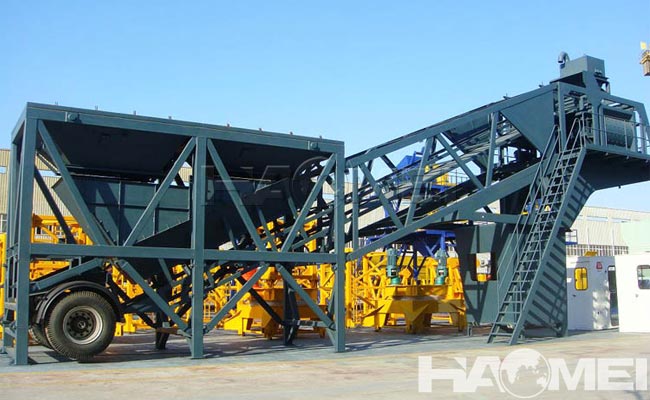
In the field of concrete mixing equipment, mobile concrete batch plant refers to a complete production unit that integrates aggregate batching, material weighing, the main mixer, conveying systems, and the electrical control cabinet onto a single towing chassis. It can be towed as a whole unit for relocation and put into operation quickly without the need for a permanent concrete foundation. Combining the production capacity of a stationary concrete batch plant with the mobility of a vehicle, mobile concrete batch plant is widely used in projects characterized by dispersed sites and flexible schedules, such as road construction, rural infrastructure development, municipal repairs, and emergency maintenance. As an export professional at Haomei Machinery, I often describe it as a “compact ready mix concrete plant on wheels”—a description that helps overseas clients quickly grasp its core characteristics.
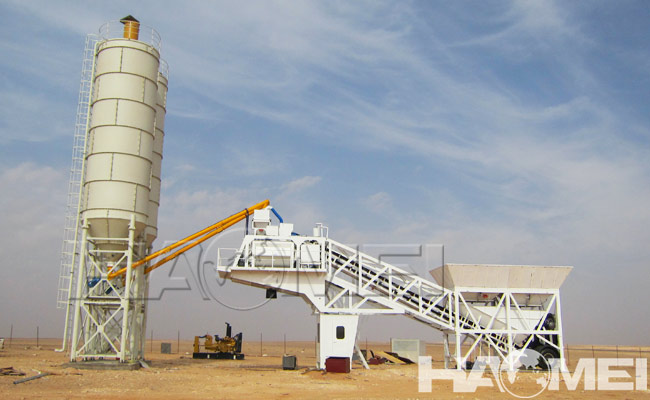
A complete YHZS series mobile concrete batch plant consists of five major systems.
The first is the towing chassis, which integrates the towing pin, axles and tires, and hydraulic outriggers, handling both the mobility of the entire unit and on-site leveling.
The second is the aggregate batching unit; typically utilizing a PLD series multi-bin batcher, it stores 2–4 types of sand and gravel aggregates and uses a weighing hopper to perform graded measurement.
The third is the main mixer; the standard configuration features a twin-shaft forced mixer (such as the JS500, JS750, JS1000, or JS1500 models), which determines the mixing quality and maximum production capacity.
The fourth is the powder and liquid weighing system, comprising weighing hoppers for cement, water, and admixtures, along with their associated screw conveyors.
The fifth is the PLC electrical control system, which manages the fully automated processes of batching, mixing, and discharging. Additionally, pulse dust collectors, pneumatic piping, and centralized lubrication systems are included as standard equipment.
Within the industry, mobile concrete batching plants are classified by production capacity, forming a comprehensive lineup of YHZS models. The YHZS25 features a JS500 mixer (500L nominal discharge capacity) and a theoretical output of 25 m³/h. The flagship YHZS35 model, equipped with a JS750 mixer and a theoretical output of 35 m³/h, is the most popular choice globally for small-to-medium-sized projects. Mid-range models YHZS50 and YHZS60 utilize the JS1000 mixer, offering theoretical outputs of 50–60 m³/h. The large-scale YHZS90 model employs the JS1500 mixer, achieving a theoretical output of up to 90 m³/h to meet the demands of medium-to-large-scale construction operations. Across the entire YHZS series, metering accuracy reaches ±2% for aggregates and ±1% for powders and liquids, ensuring concrete quality comparable to that of commercial ready-mix plants.
Once positioned, the PLC control system automatically initiates operations based on preset mix ratios. Aggregates are discharged sequentially from batching bins, cumulatively weighed, and transported via an inclined conveyor to the aggregate hopper atop the mixer. Cement is fed into a weighing hopper by a screw conveyor, while water and admixtures are weighed independently. The four materials are charged into the twin-shaft mixer according to a programmed sequence; after approximately 60 seconds of forced mixing, the pneumatic discharge gate opens to unload the finished concrete into transport trucks. The entire cycle operates seamlessly, enabling continuous, stable concrete production over an 8-hour shift.
The primary value of mobile concrete batch plants lies in deployment efficiency and asset flexibility. On-site requirements are minimal—only a leveled, hardened surface is needed—and production can commence within 12–24 hours of leveling the hydraulic support legs. This eliminates the substantial civil foundation costs (often tens of thousands of dollars) and the 7–10 day construction period associated with stationary concrete batching plants. Relocation requires no disassembly of core components; the unit can be towed directly to a new site at speeds of 40–50 km/h. A single unit can serve multiple projects consecutively, significantly boosting asset utilization. For overseas projects involving multiple work sections, short timelines, or space constraints, this “produce-on-the-go” capability offers a distinct advantage in overall cost-efficiency.
Based on industry experience, selecting the right model requires a comprehensive assessment of total project volume, daily production requirements, site conditions, and the frequency of relocation: the YHZS25–35 is suitable for small-scale, scattered projects; the YHZS50–60 series for medium-sized municipal works; and the YHZS90 series for large-scale, continuous construction. Haomei Machinery’s YHZS series mobile concrete batch plants offering solutions that span from standard configurations to customized setups for challenging environments—such as extreme cold, high-wind/dusty areas, and corrosive conditions. Backed by a global network of spare parts warehouses and technical support, the company helps overseas customers rapidly deploy mobile concrete mixing plants tailored to their specific projects.
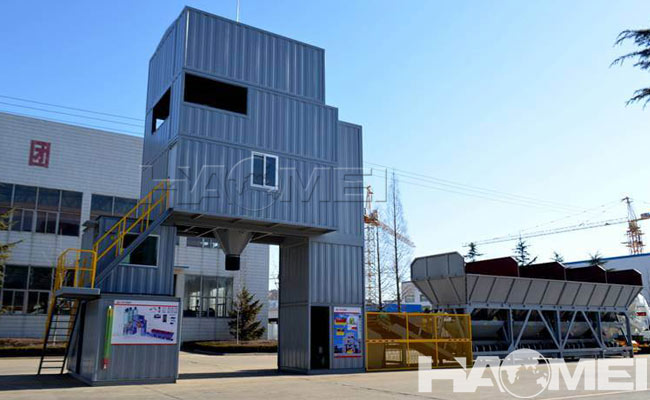 Advantages of Containerized Concrete Batch Plant
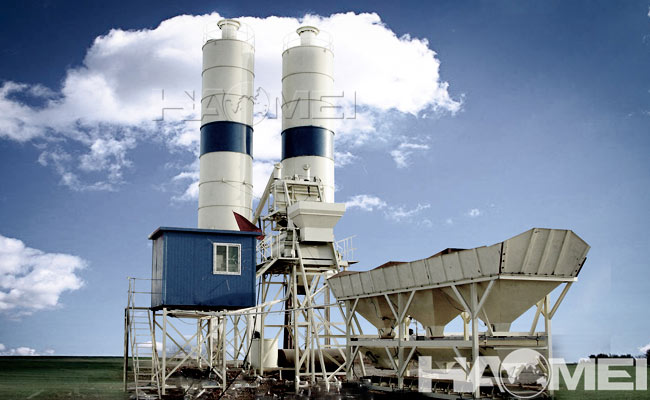 Concrete Batching Plant With Compact Structure
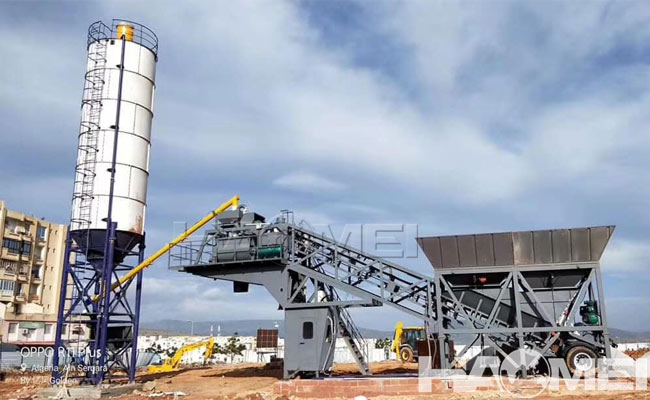 Small Mobile Batching Plant Price in 2026
 Portable Concrete Plant Price