

Categories
- Case & News (50)
- Blog (610)
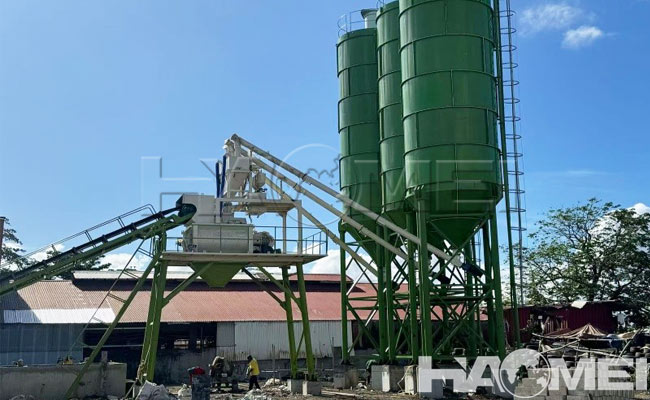
Small mobile concrete batching plants (capacity 25-60 m3/h) are core procurement equipment for small and medium-sized infrastructure projects, rural road networks, and municipal repair projects worldwide. In export procurement, small mobile batching plant price structures often deviate significantly due to blurred configuration boundaries and confusion between standard and optional configurations. Based on Haomei Machinery’s over 20 years of experience in export pricing and project implementation, we clearly breaks down the standard price range, the logic behind optional configuration markups, and the root causes of price differences, providing a directly referable pricing basis for procurement.
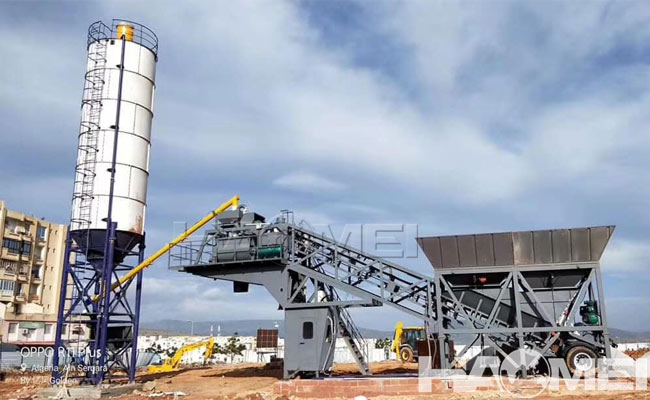
The 2026 FOB benchmark price at Chinese ports is calculated based on industry-standard configurations: including a twin-shaft forced mixer, a 3-compartment aggregate batching system, a graded independent weighing unit, a basic PLC control system, and a pulse dust collector, but excluding cement silos, additional conveying equipment, and customized modifications. The YHZS25 small mobile batching plant, an entry-level lightweight model, comes standard with a JS500 main unit, suitable for small-scale temporary projects, with an FOB price of US$38,000-45,000. The YHZS35 small mobile batching plant, the best-selling mainstream model globally, comes standard with a JS750 main unit, stably producing over 240m³ per 8-hour shift, covering most small and medium-sized infrastructure projects, with an FOB price of US$46,000-53,000. The YHZS50 small mobile batching plant is a mid-capacity entry-level model, comes standard with a JS1000 main unit, capable of undertaking small-scale continuous construction projects such as municipal and factory projects, with an FOB price of US$58,000-70,000. The YHZS60 small mobile batching plant is the highest-capacity model for small stations, with enhanced main unit and conveyor system to meet high-paced construction needs, with an FOB price of US$72,000-88,000.
Standard configurations of mobile batching plant meet basic production needs, while optional features for different working conditions and functional requirements correspond to clear price increases. In warehousing equipment options, the most commonly used 50-ton split cement silo (including screw conveyor and top dust collector) costs an additional $8,500-$12,500 per set, while the 100-ton version costs an additional $16,000-$21,000. In electrical control options, upgrading from a basic semi-automatic to a fully automatic intelligent control system (including touchscreen, production data recording, and fault self-diagnosis) costs an additional $6,000-$9,000, and adding a remote monitoring module costs an additional $3,000-$5,000. For customized equipment, oil circuit heating and insulation upgrades for high-altitude and cold regions cost an additional $4,000-$6,000, while upgrades for sealing, dust prevention, and heat dissipation in high-temperature and sandy areas cost an additional $3,000-$5,000. Upgrading to anti-corrosion coatings in coastal areas costs 5%-7% of the total equipment price.
Based on over ten years of industry experience, price differences exceeding 15% between similar small mobile batching plant models largely stem from hidden reductions in configuration and service, a common pitfall in low-price procurement. Some manufacturers use ordinary steel plates instead of high-manganese steel wear-resistant liners, reducing the main unit cost by 30% but halving the lifespan. Others attract customers with bare-metal quotes, excluding essential components like dust collectors and foundation weighing systems, which customers must purchase before production, ultimately increasing the total cost by more than 10%. Still others offer low-priced orders without factory commissioning and overseas technical support, requiring on-site installation to delay the project by up to ten days, resulting in downtime losses far exceeding the initial price difference.
Overall, the small mobile batching plant prices is “configuration corresponding to price.” Overseas procurement should not simply pursue the lowest price, but should match the configuration to the project’s capacity, operating conditions, and service requirements to truly control the entire lifecycle cost. Haomei Machinery consistently adheres to transparent configuration and pricing, with all quotations corresponding to a clear configuration list, leveraging its global service network to provide customers with on-the-ground support.
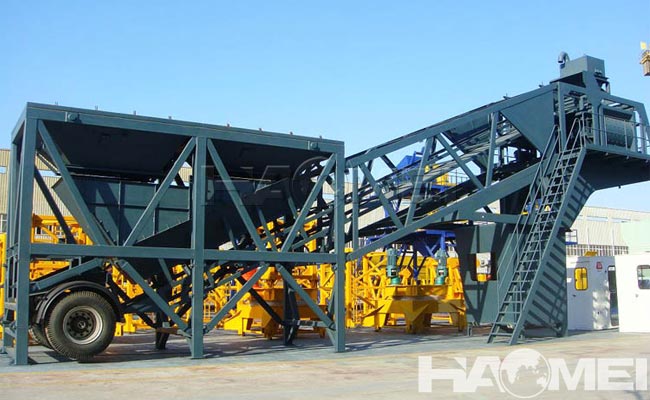 Portable Concrete Plant Price
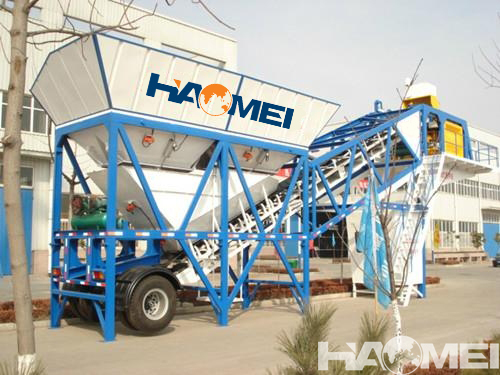 Mobile Compact Concrete Batching Plants
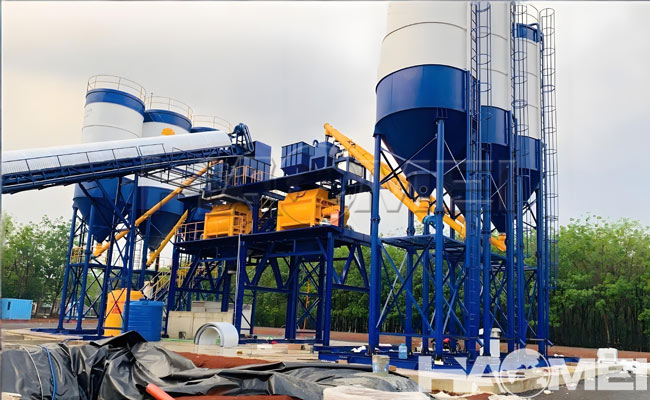 Wet Type Concrete Batching Plant
 Mini Wet Mix Concrete Batching Plants