

Categories
- Case & News (50)
- Blog (605)
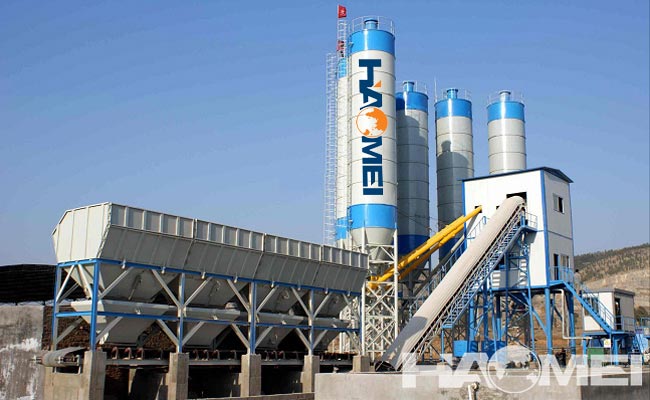
In the global infrastructure market, the application scenarios for dry mix concrete batching plants are extremely diverse: from rainy tropical construction sites in Southeast Asia to dusty desert projects in the Middle East, and remote areas in Africa with unstable power grids. A single standardized product cannot easily dominate all markets. European and American brands often adhere to local design standards, resulting in high customization costs and long delivery cycles. In contrast, China dry-mix concrete batching plants, with their strong global adaptability, are rapidly seizing market share in emerging markets. In 2025, China’s batching plant exports increased by over 12% year-on-year, reaching a 58% market share in Southeast Asia. This success is supported by a systematic adaptability across three dimensions: working conditions, compliance, and implementation. Haomei Machinery is a typical representative of this type of export-oriented manufacturer.
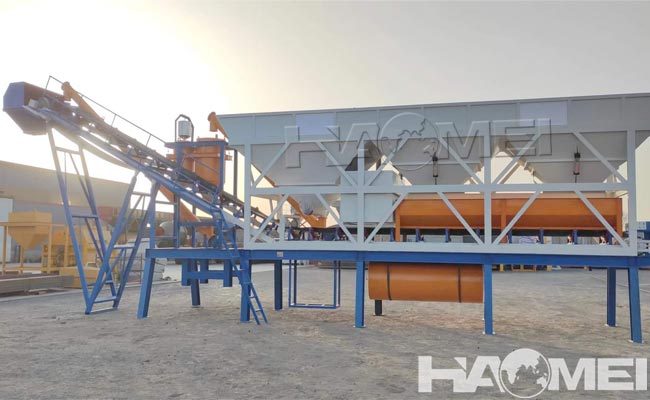
Full-condition customization capability, adapting to diverse and extreme global environments. China’s vast territory and diverse domestic construction scenarios encompass almost all extreme working conditions, including extreme cold, high temperature, high humidity, sandstorms, and salt spray. This has forced domestic manufacturers to build multi-scenario compatibility capabilities from the design stage. Solutions validated in the domestic market can be naturally adapted overseas, creating a significant advantage. For the high-temperature, sandstorm environments of the Middle East (above 50°C), China dry mix concrete batching plants can be upgraded with redundant cooling systems and multiple shaft-end sealing structures to effectively prevent sand and dust intrusion and avoid main unit overload shutdowns. For coastal areas of Southeast Asia, hot-dip galvanizing can be applied to the steel structure for corrosion protection, adapting to salt spray and humid conditions. Addressing the challenge of unstable power grids in remote African regions, the electrical control system can be optimized to support a wide voltage range of 380V-440V, with a backup diesel generator set. All core wear-resistant components of Haomei’s entire series of dry mix concrete plants are made of thickened high-manganese steel, with a service life exceeding 7000 hours under normal operating conditions, stably adapting to the continuous operation needs of different regions.
Multi-standard compliance capabilities, covering mainstream global certification systems. Different countries have vastly different requirements for the metering, safety, and environmental protection of mixing equipment. Compliance directly determines whether the equipment can clear customs and pass project acceptance. China dry mix concrete batching plant manufacturers generally possess mature international certification adaptation capabilities, with core metering accuracy fully complying with the ISO 19720 international standard: aggregate dynamic metering error ≤ ±2%, cement, admixture, and other powder metering error ≤ ±1%, meeting the requirements of concrete construction specifications such as EN 206. Based on this, they can quickly connect to certification standards in different regions such as CE, SASO, GOST, and IS, without requiring customers to invest additional modification costs. Taking Haomei Machinery as an example, all our dry-mix concrete plants are CE certified by default, and can issue corresponding certification documents according to the customer’s country of residence, ensuring compliance throughout the equipment clearance and project acceptance process. This is the core foundation for its ability to cover more than 100 countries and regions worldwide.
Lightweight deployment capabilities adapt to the fast-paced demands of overseas infrastructure projects. Overseas projects generally face pain points such as a shortage of skilled workers, high labor costs, and tight schedules. The installation and deployment of traditional modular equipment has always been a challenge for the industry. Mainstream China dry-mixing concrete plants generally adopt a highly modular design, with core components, pipelines, and sensors pre-assembled and integrated in the factory. Haomei Machinery has even increased the pre-assembly rate of the entire plant to over 80%. The disassembled equipment is perfectly compatible with standard container shipping, eliminating the need for special bulk carriers and controlling cross-border logistics costs. On-site installation only requires modular flange connections and wiring connections, eliminating the need for secondary welding. The mainstream HZS60 dry-mixing plant can be put into operation from arrival at the site in just 4-6 days, shortening the installation cycle by more than 50% compared to the modular equipment from Europe and America. Some smaller models can also be adapted to a foundation-free solution, requiring only a leveled and hardened ground surface for placement, significantly reducing civil engineering investment and construction time.
Essentially, the competitiveness of China dry-mix concrete batching plants has never been solely based on price advantages, but rather on the rapid adaptability honed in complex markets—capable of matching different regional working conditions and compliance requirements, as well as adapting to overseas implementation pace and operating conditions. For global customers, choosing a dry mixing plant from a mature exporter like Haomei Machinery is essentially choosing a localized solution that can be directly implemented, rather than a standardized piece of equipment that requires self-adaptation.
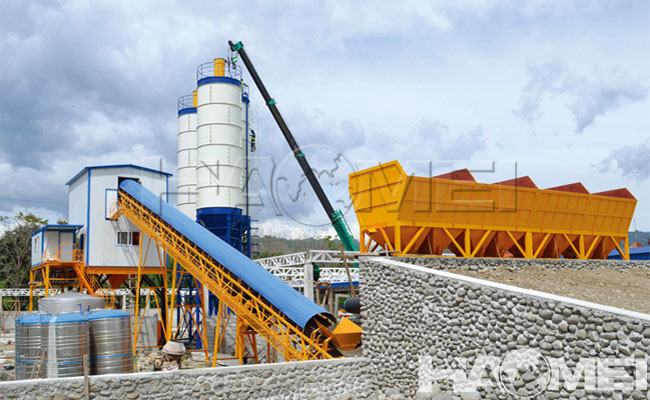 90m3/h Belt Conveyor Concrete Batching Plant
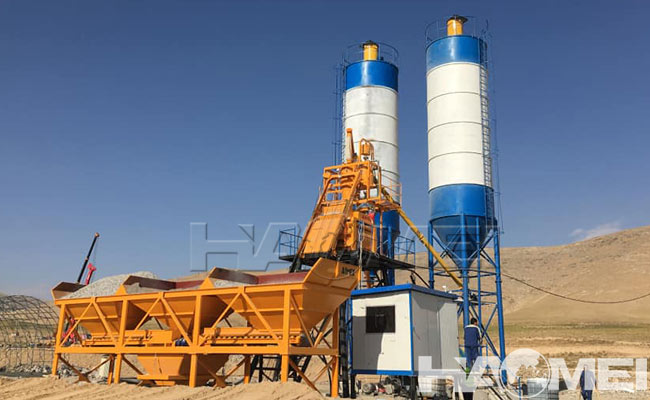 How Much Does Mini Concrete Batching Plant Cost?
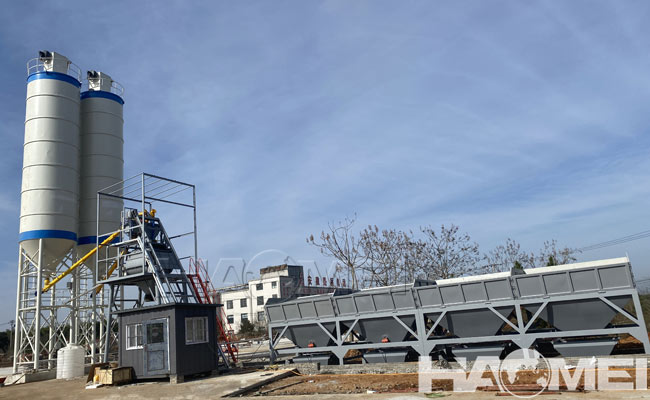 50m3/h Precast Concrete Batching Plant
 Dust Collector Options For Concrete Mixer Plants