

Categories
- Case & News (50)
- Blog (611)
In the traditional understanding of concrete production, wet mix concrete batching plants are always deeply associated with “large commercial concrete plants, centralized production, and long-distance delivery.” Mini wet mix concrete batching plants in the 25-60 m3/h range are often mistakenly seen as “transitional” or “watered-down” versions. However, with the increasing trend of global infrastructure development towards localized areas and project decentralization, mini wet mix concrete batching plants are transforming from a supplementary role into core production units for distributed construction. They are not simply scaled-down versions of large commercial concrete plants, but rather a complete solution adapted to localized production and on-demand supply scenarios. Haomei Machinery’s series of small-scale wet-mix plants is a mature representative of this approach.
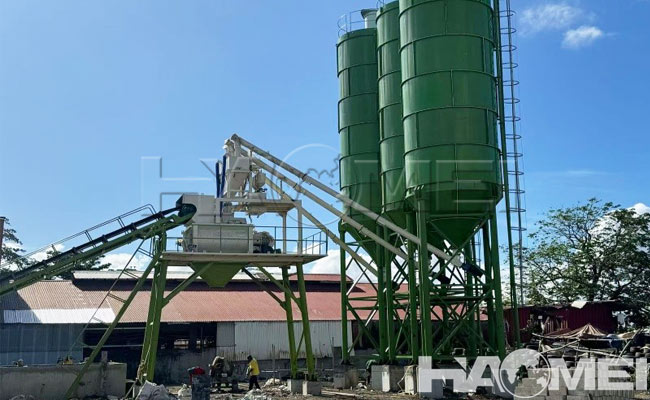
Many buyers worry that the metering accuracy and mixing homogeneity of mini wet mix concrete batching plants will be compromised. In reality, the core performance of standard export-grade mini wet mix concrete plants fully meets the standards of large-scale plants. Haomei’s mini wet mix concrete batching plants are equipped with JS series twin-shaft forced-action mainframes: the HZS25 model uses a JS500 mainframe, the HZS35 model uses a JS750 mainframe, and the HZS50/60 model uses a JS1000 mainframe. The standard mixing cycle is controlled within 60-72 seconds, enabling stable production of C10-C50 grade ordinary concrete and pumped concrete. The metering system uses an independent electronic weighing module, combined with a dynamic drop compensation algorithm, ensuring aggregate dynamic metering error ≤±2%, and cement, water, and admixture metering error ≤±1%, fully complying with EN 206 and ISO 19720 international standards. The strength dispersion of the finished concrete is not significantly different from that of large commercial concrete plants, completely solving the problem of unstable quality caused by traditional on-site manual mixing.
The core advantage of mini wet mix concrete batching plant is its flexible and efficient nature. Large commercial concrete mixing plants rely on heavy civil engineering and have long installation cycles, making them suitable for long-term operation at fixed locations; while mini wet mixing plants are inherently suited for short-cycle, multi-location, and dispersed construction scenarios. The entire concrete batching plant adopts a modular design, with core components pre-assembled and debugged in the factory. On-site installation only requires flange connection and wiring. Fixed mini wet mix concrete batching plant models can be put into operation in 5-7 days, while the YHZS mobile mini wet mix concrete batching plant model can be quickly deployed in 2-3 days. Some configurations support foundation-free solutions, requiring only a leveled and hardened ground surface for operation. In terms of footprint, the HZS35 wet mix batching plant occupies only about 10m x 6m, making it suitable for installation in small construction sites, idle land in towns, and even remote areas with poor transportation, such as mining areas and mountainous regions. The mobile concrete batching plant can be towed and relocated by semi-trailer, increasing equipment reuse rate by over 60%, perfectly matching the multi-site construction needs of rural road networks, municipal emergency repairs, and distributed wind power foundations.
For small and medium-sized projects, the idle capacity of large concrete batching plants and the losses from long-distance delivery are the most easily overlooked hidden costs. From an initial investment perspective, the procurement cost of a HZS60 wet mixing plant is only about 40% of that of a HZS120 commercial concrete plant, significantly reducing capital occupation pressure. From an operational perspective, the total power of the entire plant is 55-85kW, with a comprehensive power consumption of approximately 10-12kWh per cubic meter of concrete. The procurement cost of vulnerable parts is only 30%-40% of comparable products in Europe and America. More importantly, on-site production saves on the cost of transporting concrete mixers over tens of kilometers, while also avoiding slump loss caused by long-distance transportation, reducing the concrete scrap rate from over 10% to below 2%. The equipment operating interface supports multi-language switching, allowing ordinary workers to operate independently after simple training, further lowering the labor cost threshold in overseas markets.
All mini wet mix concrete batching plants are CE certified and support 380V/415V multi-voltage customization, and can be equipped with small pulse dust removal systems to meet local environmental protection requirements. Essentially, mini wet-mix plants are not a low-end replacement for large-scale plants, but rather the optimal production solution for distributed construction scenarios. They fill market gaps not covered by centralized commercial concrete mixing models with just the right capacity, equivalent quality, and flexible implementation methods, while also providing overseas small and medium-sized contractors with a cost-effective independent production option.
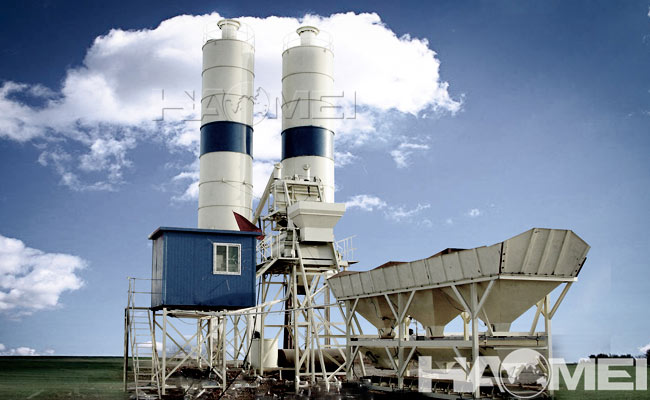 Concrete Batching Plant With Compact Structure
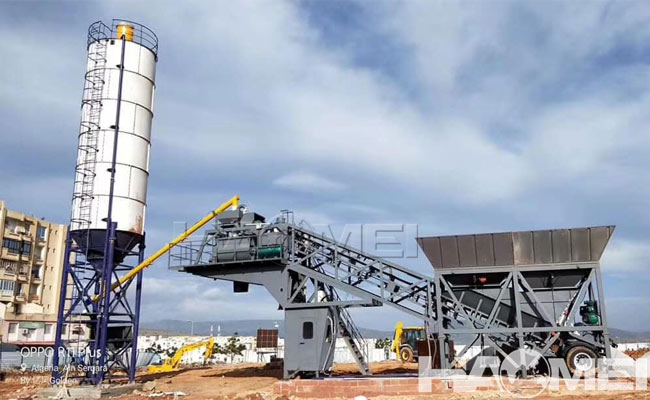 Small Mobile Batching Plant Price in 2026
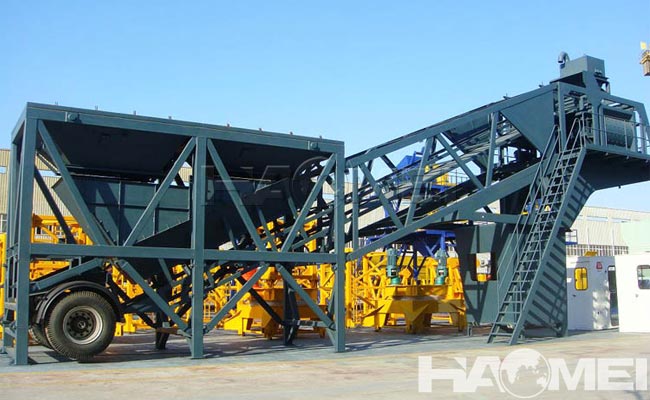 Portable Concrete Plant Price
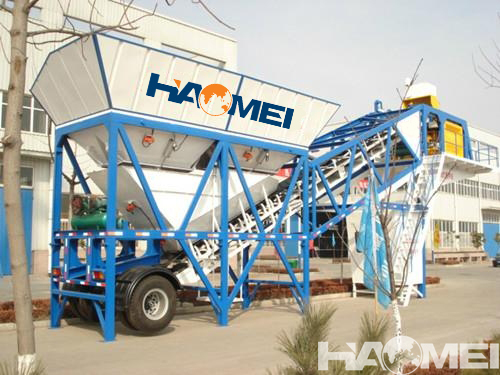 Mobile Compact Concrete Batching Plants
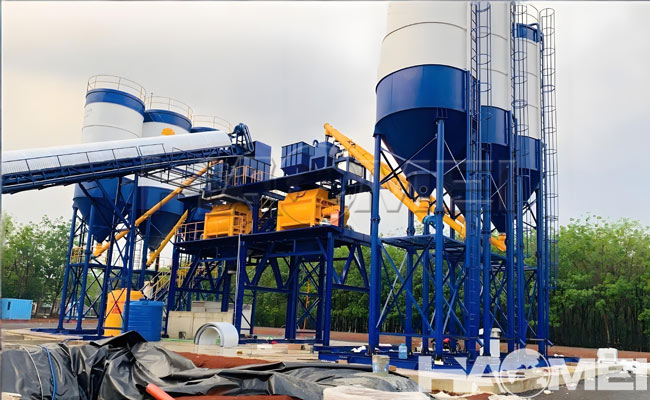 Wet Type Concrete Batching Plant