

Categories
- Case & News (50)
- Blog (616)
As the sales manager of Haomei Machinery, I have handled dozens of concrete batching plant construction projects worldwide, from basic engineering projects to high-end commercial concrete projects. I deeply understand that the success or failure of a concrete batching plant is not simply a matter of piling up equipment, but a systematic project involving four major stages: planning, selection, construction, and commissioning. Today, I will share my industry experience to break down how to set up an efficient, compliant, and sustainable concrete batching plant.
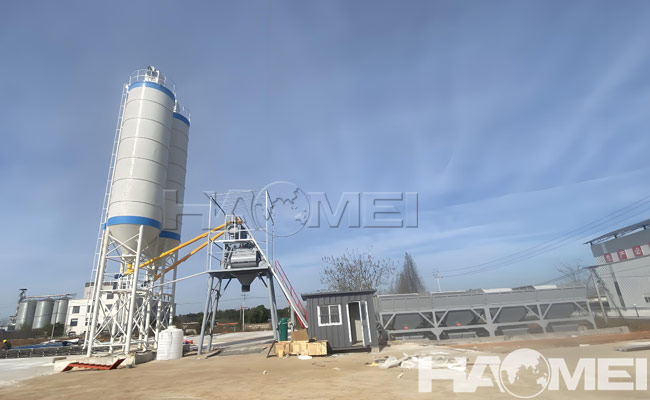
1. Preliminary Planning: Determining Scale, Selecting Site, and Obtaining Approvals
The first step in setting up a concrete batching plant is to clarify the requirements. Different projects have vastly different capacity requirements: small-scale township projects can use HZS25-HZS50 models (25-50 m³/h); medium-sized commercial concrete plants or municipal projects recommend HZS75-HZS120 models (75-120 m³/h); large-scale road and bridge projects and water conservancy projects require HZS180-HZS240 models (180-240 m³/h) or even higher configurations. It is recommended to select models with a redundancy factor of annual demand × 1.2 to reserve room for future growth.
Site selection is crucial. Prioritize areas with convenient transportation, complete water and electricity supply, and stable geology, avoiding soft soil layers and floodplains. Simultaneously, it is essential to complete the three core procedures: project approval from the National Development and Reform Commission, environmental impact assessment approval, and production capacity certification, which are prerequisites for legal production. Taking Zhejiang as an example, local regulations for green mixing plants are clear, requiring clearly defined plant areas and complete environmental protection facilities.
2. Core Equipment Selection: Choosing the Right Concrete Mixer Means Choosing the Right Productivity
Concrete mixer is the heart of a concrete batching plant, and the mixing main unit is of paramount importance. Haomei Machinery’s JS series twin-shaft forced concrete mixer uses wear-resistant alloy blades, extending its service life by 30% and increasing mixing efficiency by 20% compared to ordinary products. The mixing uniformity error of aggregates, cement, and admixtures is controlled within ±1%, which is crucial for ensuring concrete quality.
For the control system, we recommend prioritizing a PLC fully automatic control system, supporting remote monitoring and data traceability, and capable of storing 500+ mix proportions simultaneously to adapt to different project needs. Environmental protection configuration has become a mandatory requirement in recent years; pulse bag dust collectors, spray dust suppression systems, and wastewater recycling treatment devices must be standard equipment to ensure dust emission concentration ≤20mg/m³ and zero wastewater discharge.
3. Site and Infrastructure Construction: Details Determine Success or Failure
The core of site construction is hardening and seepage prevention. The factory roads are constructed using C30 concrete with a thickness of no less than 18cm, capable of supporting 80-ton tank trucks. The aggregate silos require seepage-proofing treatment, with a seepage-proof membrane laid at the bottom and a drainage slope to prevent rainwater contamination of the aggregates. The silo capacity is recommended to be designed for 7-15 days of use to avoid the risk of material shortages.
Foundation construction must strictly adhere to the drawings. The mixing unit foundation is constructed using C35 concrete, with dimensions no less than 4m × 3m × 1.5m, embedded anchor bolts with a diameter ≥24mm, a positional deviation ≤2mm, and a curing period of no less than 28 days. The powder silo foundation requires pull-out resistance to withstand strong winds and other extreme weather conditions.
4. Installation, Commissioning, and Acceptance: A Professional Team is Key
Equipment installation must be performed by the manufacturer’s professional technicians, with a focus on controlling three key aspects:
– Precise Positioning:
The horizontal and vertical errors of the mixing host, batching machine, and belt conveyor must be ≤1mm/m;
– System Commissioning:
Single-unit no-load operation for ≥2 hours, and linked load test operation for ≥72 hours, ensuring time synchronization and accurate metering of all equipment;
– Environmental Acceptance:
Connection to the local online environmental monitoring system is required. Production can only commence after dust, noise, and wastewater emissions meet standards.
5. Operation and Maintenance: The Key to Cost Reduction and Efficiency Improvement
Construction is just the beginning; daily maintenance directly impacts service life and production costs. It is recommended to establish a three-level maintenance system:
– Daily Inspection: Check blade wear, belt misalignment, and sensor calibration;
– Weekly Inspection: Lubricate all transmission parts and clean accumulated material in the hopper;
– Monthly Inspection: Conduct a comprehensive inspection of the electrical and hydraulic systems and replace vulnerable parts.
Meanwhile, energy consumption is reduced through intelligent management: PLC systems optimize batching timing, reducing idle running time; variable frequency technology controls motor speed, achieving energy savings of 15%-20%.
Setting up a concrete batching plant is essentially about creating a highly efficient concrete production ecosystem. From initial planning to commissioning and operation, every step requires meticulous attention. As Haomei Machinery, we not only provide core equipment such as the HZS series concrete batching plants, but also offer a one-stop solution from site selection planning, equipment selection, installation and commissioning to after-sales operation and maintenance.
If you are planning to set up a concrete batching plant, please feel free to contact us. With 30 years of industry experience, we will tailor a concrete batching plant suitable for the global market to help your business expand overseas.
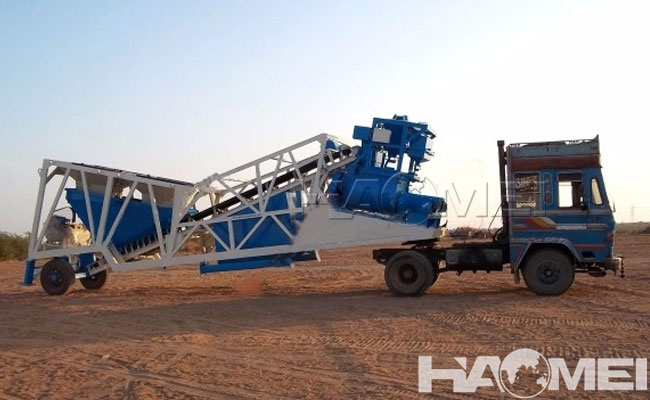 Easy Installation Mobile Concrete Batching Plant
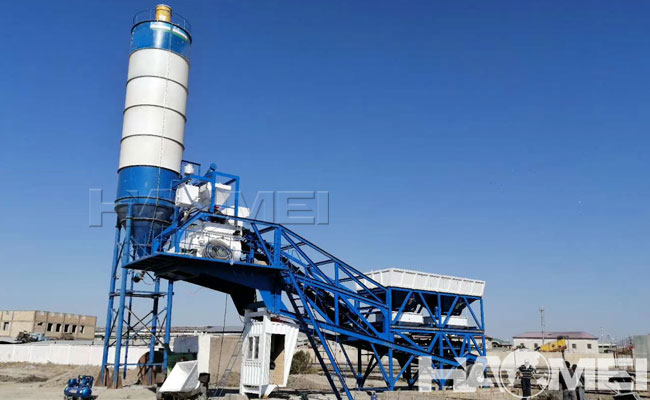 Fast Setup Mini Mobile Concrete Batching Plants
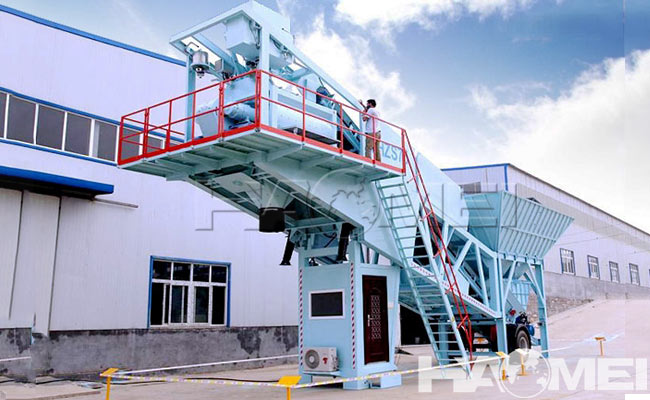 China Mobile Concrete Plant Factory
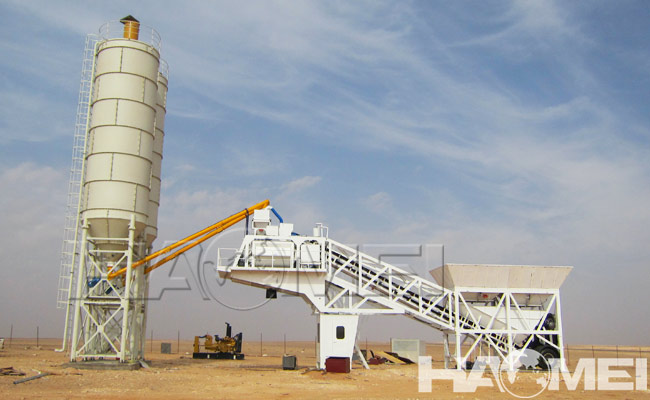 What Are Mobile Concrete Batch Plants?
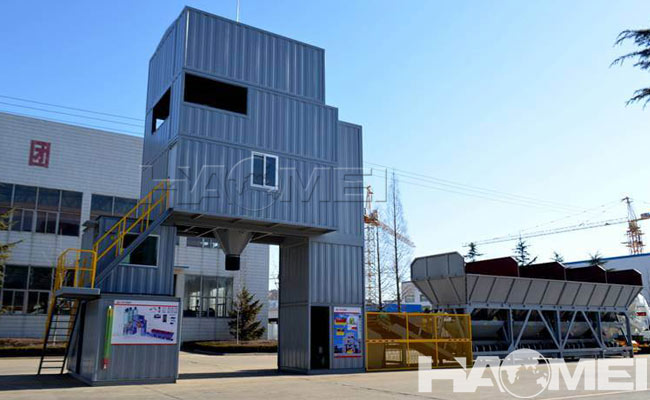 Advantages of Containerized Concrete Batch Plant