

Categories
- Case & News (50)
- Blog (616)
Many people’s understanding of wet type concrete batching plants is still limited to the simple process of “aggregate + powder + water mixing.” In reality, the core value of this type of equipment is never just the “adding water” action, but rather the homogeneity control throughout the entire process—the stability of the water-cement ratio and the uniformity of material mixing directly determine the strength dispersion and construction reliability of the finished concrete. Haomei Machinery’s wet type concrete batching plants are built around this core concept of “homogeneous production,” forming a complete control system from metering and mixing to dynamic correction, providing overseas customers with stable and reliable concrete production solutions.
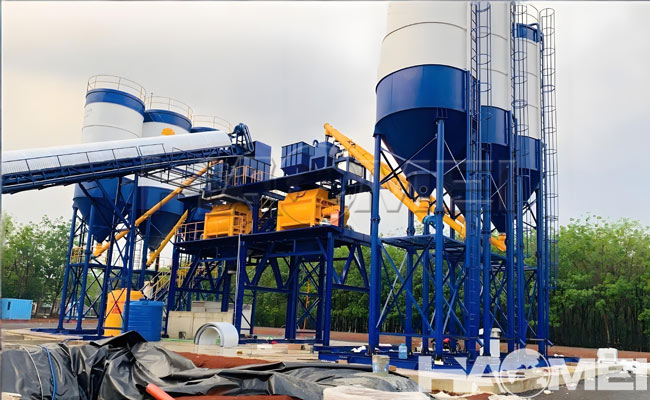
Accurate water metering is the fundamental basis of wet homogeneous production. The water-cement ratio is a core variable affecting concrete strength. Many low-priced wet type batching plants use simple valves to control water, with metering errors generally exceeding ±5%, directly leading to large batch-to-batch strength fluctuations and high defect rates. Haomei wet mix concrete batching plants employ a dual-calibration water metering system using electronic weighing and flow sensors, coupled with a dynamic drop compensation algorithm. This allows for precise control of valve closing timing, with water metering errors consistently ≤±1%. Admixtures are metered synchronously with water, with errors also controlled within ±1%. The water-cement ratio deviation per batch remains stable within 0.02, eliminating mix ratio fluctuations at the source. Compared to traditional manual water control, the entire system can reduce the standard deviation of concrete’s 28-day compressive strength by over 40%, fully meeting the homogeneity requirements of the EN 206 international concrete standard.
Twin-shaft forced mixing is the core carrier for deep homogenization. The difference in wet mixing effects essentially stems from the varying shearing and mixing capabilities of the mixing host. Haomei’s wet mix concrete plants are equipped with a JS series twin-shaft forced mixing host, featuring a spiral staggered blade arrangement. During mixing, a three-dimensional material flow field of shearing, tumbling, and axial pushing is formed, allowing sand, cement, and water to be cross-mixed in all directions within the drum, eliminating dead zones. Within a standard 60-second mixing cycle, the mortar density variation coefficient can be stably controlled within 0.8%, achieving uniform mixing even for fiber-reinforced concrete and complex admixture-based special concretes. The equipment can stably produce concrete of all grades from C10 to C60, covering various working conditions including plastic, pumpable, and dry-hard concrete, suitable for various engineering needs such as building construction, municipal engineering, and road and bridge construction. The main unit liner and mixing blades are made of thickened high-manganese steel, with a service life exceeding 8000 hours under normal operating conditions. The shaft end employs a multi-layer sealing structure to effectively prevent mortar leakage and dust ingress, ensuring stability during long-term continuous operation.
Dynamic moisture content correction offsets the interference of environmental variables on homogeneity. The most easily overlooked variable in wet mixed concrete production is the inherent moisture content of the aggregates—the moisture content of sand and gravel fluctuates greatly due to weather and storage methods. Without correction, the actual water-cement ratio will deviate significantly from the design value. Haomei wet type concrete batching plants can be equipped with an online aggregate moisture content monitoring system. This system collects real-time sand and gravel moisture data and simultaneously feeds it back to the PLC control system, automatically calculating and adjusting the net water addition to offset mixing deviations caused by rain and humid environments. Even in rainy Southeast Asia and humid coastal areas, it maintains a consistently accurate and stable water-cement ratio. Simultaneously, the main unit’s unloading residue rate is ≤0.5%, preventing residual material from the previous batch from interfering with the next batch’s mixing ratio, further ensuring batch-to-batch quality consistency.
In addition, wet mix itself reduces dust emissions at the source. Combined with the standard pulse bag filter system, dust emission concentrations are ≤30mg/m³, making it more suitable for construction scenarios in urban areas and residential areas than dry mix concrete batching plants. The automatic main unit cleaning system allows for one-click cleaning of the drum after each shift, eliminating the need for manual entry and reducing maintenance intensity and safety risks. All products are CE certified, support multiple voltage standards and multilingual operating interfaces, and are adaptable to construction and compliance requirements in different regions worldwide.
Essentially, a high-quality wet type concrete batching plant is a precise and homogeneous production system. Haomei achieves ultimate homogeneity through end-to-end control from metering to mixing to environmental correction, providing stable, reliable, and high-standard concrete production capabilities for overseas engineering and commercial concrete clients.
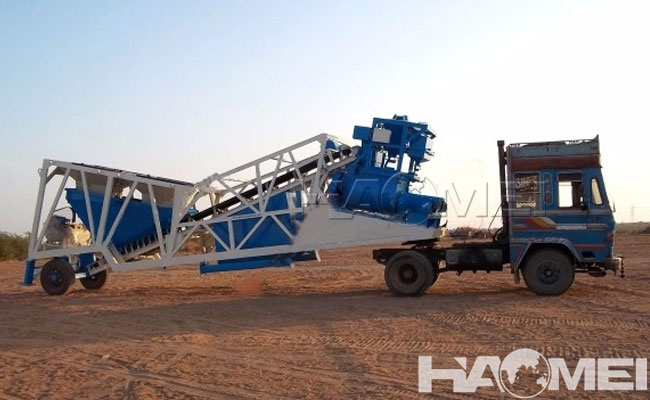 Easy Installation Mobile Concrete Batching Plant
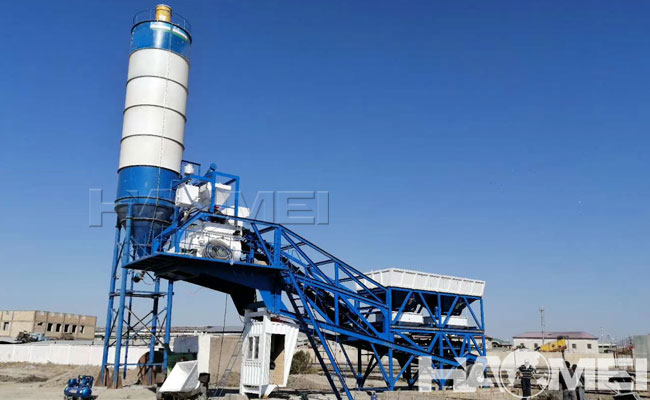 Fast Setup Mini Mobile Concrete Batching Plants
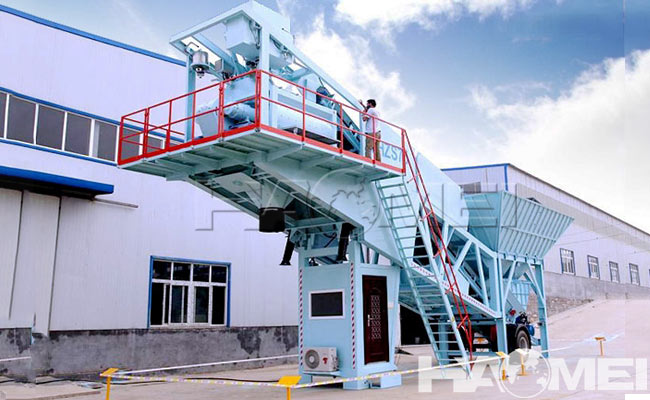 China Mobile Concrete Plant Factory
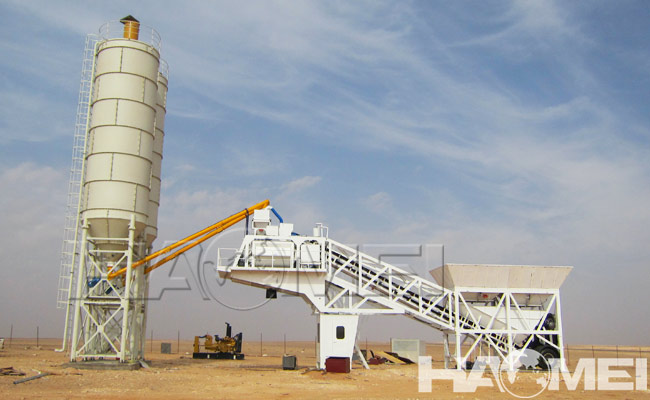 What Are Mobile Concrete Batch Plants?
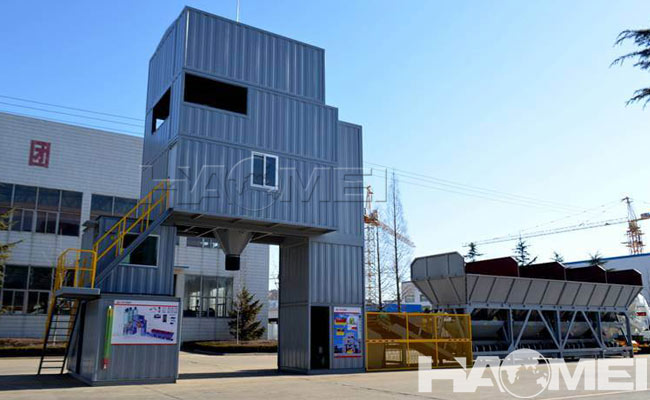 Advantages of Containerized Concrete Batch Plant